$162.99
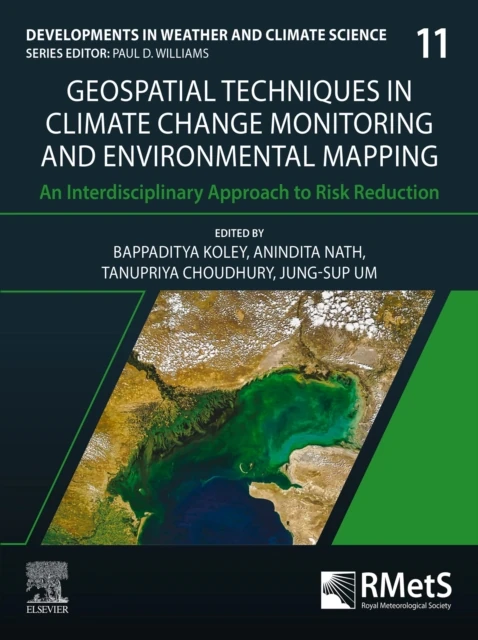
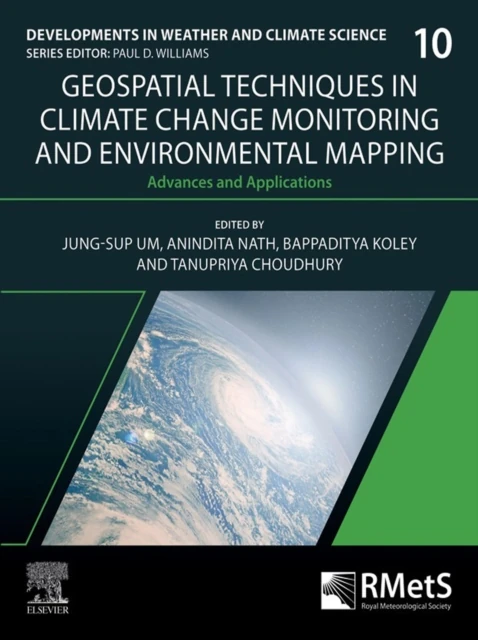
Geospatial Techniques in Climate Change Monitoring and Environmental Mapping
Advances and Applications

Geospatial Techniques in Climate Change Monitoring and Environmental Mapping: Advances and Applications, Volume Ten
The book delves into the novel methods and applications of remote sensing in climate-change studies. It begins by exploring climate observation and monitoring, consolidating remote sensing data systems for environmental mapping, and tracking air pollution using remote sensing data.
The volume covers the use of remote sensing data for monitoring and predicting climate change, characterizing land changes with climate time series data, and tracking climate change and tropical cyclones with geospatial techniques. It also discusses the system dynamics model of economic development and climate change, as well as climate change mitigation, adaptation, and future directions.
Additionally, it addresses climate modeling, validation, uncertainty mapping, and the application of remote sensing data in government climate policies and sustainable risk reduction approaches for global climate change issues. Members of the Royal Meteorological Society are eligible for a 35% discount on all Developments in Weather and Climate Science series titles. See the RMetS member dashboard for the discount code.
Advancements and Interdisciplinary Perspectives
Integrates the latest advancements in sensor technologies and data analysis methods, offering readers insights into the management of climate risks and hazards as well as adaptation strategies.
Provides an interdisciplinary understanding of climate change challenges and solutions by gathering high-quality contributions from scientific, social, economic, political, and cultural perspectives.
Examines potential responses to climate change hazards and how to implement strategies in various sectors, considering vulnerability and exposure factors and addressing the social, economic, political, and cultural dimensions of climate change.