$112.99
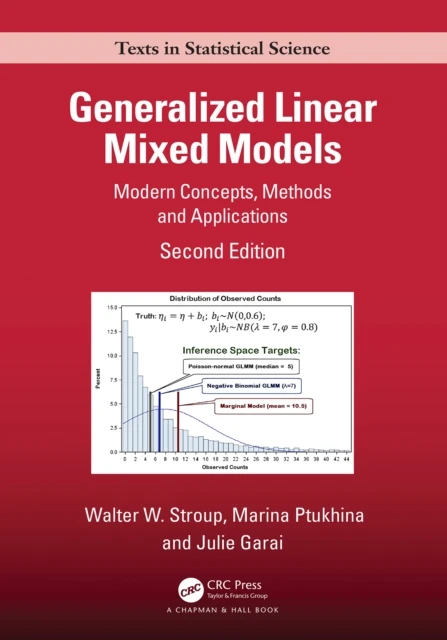
Generalized Linear Mixed Models
Modern Concepts, Methods and Applications

Generalized Linear Mixed Models: Modern Concepts, Methods, and Applications (2nd edition)
presents an updated introduction to linear modeling using the generalized linear mixed model (GLMM) as the overarching conceptual framework. For students new to statistical modeling, this book helps them see the big picture - linear modeling as broadly understood and its intimate connection with statistical design and mathematical statistics. For readers experienced in statistical practice, but new to GLMMs, the book provides a comprehensive introduction to GLMM methodology and its underlying theory.
Unlike textbooks that focus on classical linear models or generalized linear models or mixed models, this book covers all of the above as members of a unified GLMM family of linear models. In addition to essential theory and methodology, this book features a rich collection of examples using SAS(R) software to illustrate GLMM practice. This second edition is updated to reflect lessons learned and experience gained regarding best practices and modeling choices faced by GLMM practitioners. New to this edition are two chapters focusing on Bayesian methods for GLMMs.
Key Features
Most statistical modeling books cover classical linear models or advanced generalized and mixed models; this book covers all members of the GLMM family - classical and advanced models
Incorporates lessons learned from experience and on-going research to provide up-to-date examples of best practices
Illustrates connections between statistical design and modeling: guidelines for translating study design into appropriate model and in-depth illustrations of how to implement these guidelines; use of GLMM methods to improve planning and design
Discusses the difference between marginal and conditional models, differences in the inference space they are intended to address and when each type of model is appropriate
In addition to likelihood-based frequentist estimation and inference, provides a brief introduction to Bayesian methods for GLMMs