£109.50
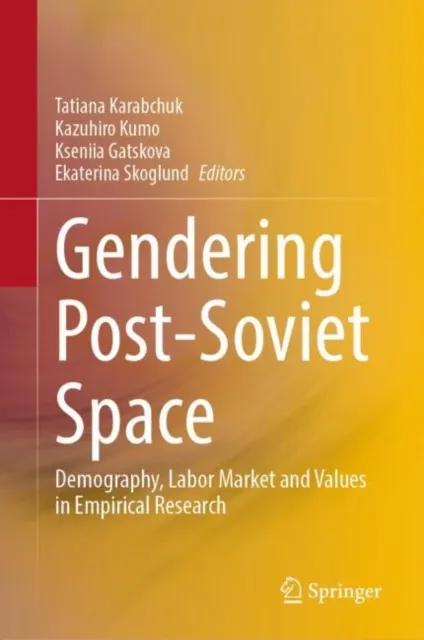
Gendering Post-Soviet Space
Demography, Labor Market and Values in Empirical Research

Overview
This volume combines approaches from three disciplines – economics, sociology, and demography – and empirically analyzes the key aspects of the labor market and social demography processes in post-Soviet transitional societies while focusing on the gender perspective. Here, readers will find empirical studies on such countries as Armenia, Azerbaijan, Belarus, Estonia, Georgia, Kazakhstan, Kyrgyzstan, Russia, Tajikistan, Ukraine, and Uzbekistan. The volume contributes to the literature by addressing the lack of academic empirical research on gender difference issues in the labor markets of post-Soviet countries as well as gender inequalities in fertility preferences, gender disparities among the youth and elderly, the gender pay gap, gender differences in employment, and female voices. The book brings together researchers of different disciplines from a variety of countries, distinguishing this project as international and interdisciplinary. The authors use the quantitative survey micro-data approach as well as the qualitative methods of interview data analysis to provide a comprehensive and detailed overview of the economic and social developments in the region regarding gender differences. The volume consists of three parts tackling the following topics: 1) gender differences and demography (family formation and fertility, youth and elderly employment); 2) gender differences and labor market (gender wage gap, motherhood wage penalty, gender differences among freelancers, and women in STEM science); and 3) gender differences, well-being, and gender equality attitudes (women’s voices, women’s collective actions, gender equality attitudes, and spending patterns of housewives).