$61.99
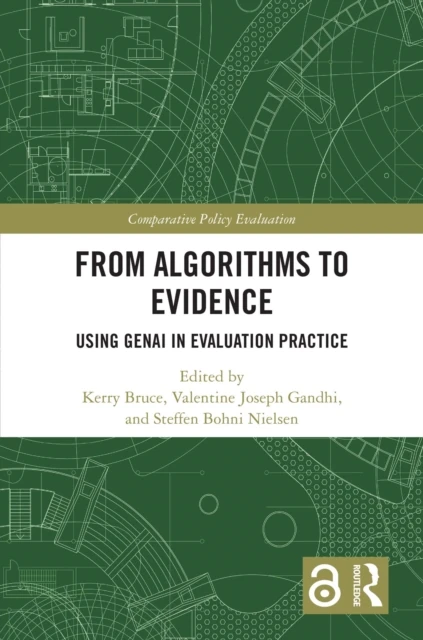
From Algorithms to Evidence
Using GenAI in Evaluation Practice

From Algorithms to Evidence: Using GenAI in Evaluation Practice
offers a timely, practice-grounded guide for evaluators and development professionals navigating the fast-moving world of generative AI. Building on the foundations laid in Artificial Intelligence and Evaluation (2025), this volume moves decisively from theory to application. It documents how evaluators across the globe are already using GenAI in real projects, showing not only what worked but also what failed, why, and under what conditions. The result is a clear, practitioner-centered resource that cuts through hype and provides grounded, real-world insight.
Structured around the seven phases of the evaluation lifecycle
(design, structuring and inception, data collection, data analysis, reporting, judgment, and utilization), this book offers concrete examples of how GenAI is being integrated into everyday evaluation tasks. Contributors explain their rationale for using AI tools, the steps they took, and the results they achieved. Crosscutting chapters synthesize lessons on methodological adaptation, evolving evaluator competencies, and the ethical and professional standards needed to use GenAI responsibly. Throughout, this volume emphasizes 'hybrid intelligence,' showing how human expertise and AI-enabled methods can work together to strengthen evaluative reasoning.
From Algorithms to Evidence
fills a critical gap in the literature. It provides evaluators, policymakers, and organizational leaders with practical guidance for building more adaptive, data-informed, and future-ready evaluation systems while keeping equity, transparency, and human judgment at the center of their work.