$81.99
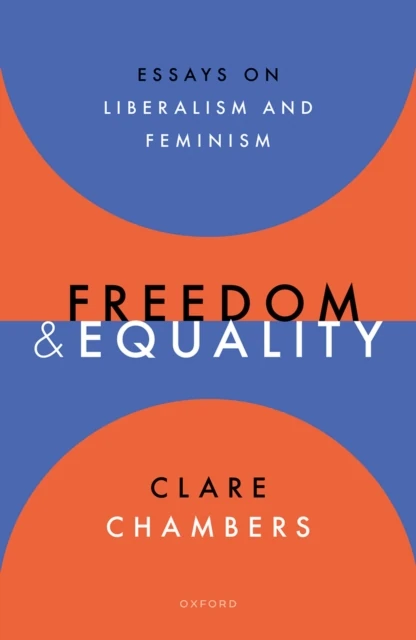
Freedom and Equality
Essays on Liberalism and Feminism

Should the state recognise gender?
Can a liberal state discourage traditional family structures?
Is women''s sport compatible with equality of opportunity?
Should feminists defend women''s freedom to choose cosmetic surgery?
Is genital cutting always wrong, or is it only wrong for girls?
Freedom and Equality
investigates the contours of feminist liberalism: a philosophical approach that is appealing but elusive. Its hallmark is a liberalism that prioritises equality and individual autonomy, while offering a rigorous critique of using individuals'' choices as the measure of justice. Liberalism without feminism prioritises individual choice, a strategy that has played a crucial role in the liberal defence of freedom against authoritarianism and conformity. However, as feminism shows, relying on individual choice is insufficient to render an outcome just, because people often choose things that harm or disadvantage themselves. From beauty norms to the gendered division of labour, from marriage to religion, women and men choose to arrange their lives in ways that perpetuate inequality. Often, these choices are made in response to social norms, including unjust, unequal, or harmful norms. It follows that relying on individual choice as a measure of justice actually leaves unjust social structures intact. Any defender of autonomy and equality must be prepared to criticise individuals'' choices while prioritising individual choosers.
Issues in Feminist Liberalism
The essays in this collection cover a wide range of issues fundamental to liberalism, to feminism, and to their intersection. They explore the foundational philosophical concepts of choice, equality of opportunity, ideology, and the state, and they engage directly with key political controversies, including women''s sport, the state recognition of gender, the regulation of cosmetic and cultural surgeries, and state action to secure equality in the family. Clare Chambers argues that feminist liberalism is both possible and necessary. It is possible because the two doctrines of feminism and liberalism are compatible, their fundamental values of freedom and equality aligned. But feminism is necessary because liberalism has shown that it is simply not up to the task of securing gender equality and women''s liberation alone.