$97.99
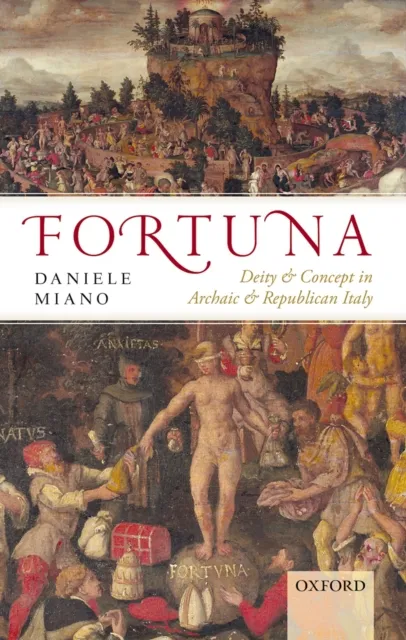
Fortuna
Deity and Concept in Archaic and Republican Italy

What is good luck and what did it mean to the Romans?
Good luck was a concept closely associated with the Roman goddess Fortuna, representing chance and good fortune. To the Romans, Fortuna was a deity embodying the unpredictable nature of luck, influencing various aspects of life such as childbirth, victory in war, and success in business.
Connections between luck and different aspects of life
Luck was believed to play a crucial role in significant life events and achievements. Fortuna's influence extended to childbirth, where her favor could determine the health and safety of mother and child; to victory in war, where her blessing could turn the tide of battle; and to success in business, where her favor could lead to prosperity and wealth.
Roman statesmen's views on luck
Figures like Cicero and Caesar engaged with the concept of Fortuna in their writings, often contemplating the role of luck and chance in human affairs. They recognized Fortuna as a powerful force that could be both beneficial and capricious, influencing the outcomes of political and personal endeavors.
The goddess Fortuna and her cultural significance
This volume focuses on Fortuna, one of the most well-known deities in ancient Italy. Her worship originated in archaic Latium and persisted through the late Republic, remaining a symbol of chance and good fortune through the Middle Ages and Renaissance. Fortuna's longevity is attributed to her status as a conceptual deity, intertwined with the idea of luck itself.
Sources and analysis of Fortuna
All available literary, epigraphic, and archaeological sources on Fortuna are examined, including sanctuaries dedicated to her, inscribed gifts from individuals, and writings by authors such as Cicero and Caesar. This comprehensive analysis aims to offer a new understanding of Fortuna's development and her role in Roman and Italian culture.
New approaches to polytheism
The study suggests a novel perspective on polytheism, emphasizing the connection between gods, goddesses, and abstract concepts like luck. This approach highlights the dynamic interaction between divine figures and human ideas, enriching our understanding of ancient religious practices.