$29.99
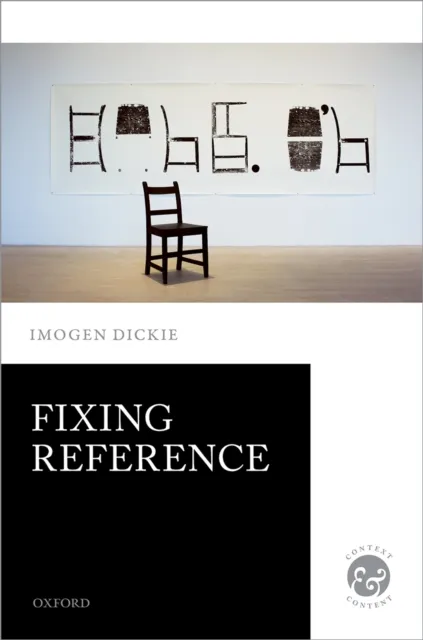
Fixing Reference

Aboutness-Fixing and Reference-Fixing
Imogen Dickie develops an account of aboutness-fixing for thoughts about ordinary objects, and of reference-fixing for the singular terms we use to express them.
Extant discussions of this topic tread a weary path through descriptivist proposals, causalist alternatives, and attempts to combine the most attractive elements of each.
The account developed here is a new beginning. It starts with two basic principles.
Principles Connecting Aboutness, Truth, and Justification
The first connects aboutness and truth: a belief is about the object upon whose properties its truth or falsity depends.
The second connects truth and justification: justification is truth conducive; in general and allowing exceptions, a subject whose beliefs are justified will be unlucky if they are not true, and not merely lucky if they are.
These principles—one connecting aboutness and truth; the other truth and justification—combine to yield a third principle connecting aboutness and justification: a body of beliefs is about the object upon which its associated means of justification converges; the object whose properties a subject justifying beliefs in this way will be unlucky to get wrong and not merely luck to get right.
Application of the Principles
The first part of the book proves a precise version of this principle. Its remaining chapters use the principle to explain how the relations to objects that enable us to think about them—perceptual attention; understanding of proper names; grasp of descriptions—do their aboutness-fixing and thought-enabling work.
The book includes discussions of the nature of singular thought and the relation between thought and consciousness.