$59.99
Finding Italy
Travel, Nation, and Colonization in Vergil's Aeneid

Finding Italy
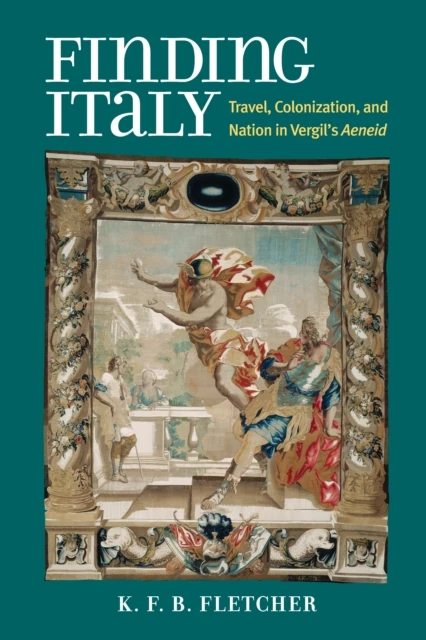
Finding Italy explores the journey of the Romans’ ancestor Aeneas and his fellow Trojans from their old home, Troy, to their new country, Italy, narrated in Vergil’s epic poem Aeneid. K. F. B. Fletcher argues that a main narrative theme is patriotism, specifically the problem of how one comes to love one’s new country. The various directions Aeneas receives throughout the first half of the poem are meant to create this love, explaining both to Aeneas and to Vergil’s readers how they should respond to the new, unified Italy synonymous with Rome. These directions come from the gods, or from people close to Aeneas who have divine connections, and they all serve to instill an emotional connection to the land, creating a mental image of Italy that tells him far more about his destination than merely its location, and ultimately making him fall in love with Italy enough to fight for it soon after his arrival. The poem thus dramatizes the birth of nationalism, as Italy is only a concept to Aeneas throughout his trip; these directions do not describe Italy as it is at the time of Aeneas’ journey, but as an ideal to be realized by Aeneas and his descendants, reaching its final, perfect form under Augustus Caesar.
Finding Italy
Finding Italy provides a very detailed reading of the directions Aeneas receives by situating them within their relevant contexts: ancient geography, Greek colonization narratives, prophecy, and ancient views of wandering. Vergil draws on all of these concepts to craft instructions that create in Aeneas an attachment to Italy before he ever arrives, a process that dramatizes a key emotional problem in the late first century BCE in the wake of the Social and Civil Wars: how to balance the love of one''s modest birthplace with the love of Rome, the larger city that now encompasses it.