$63.99
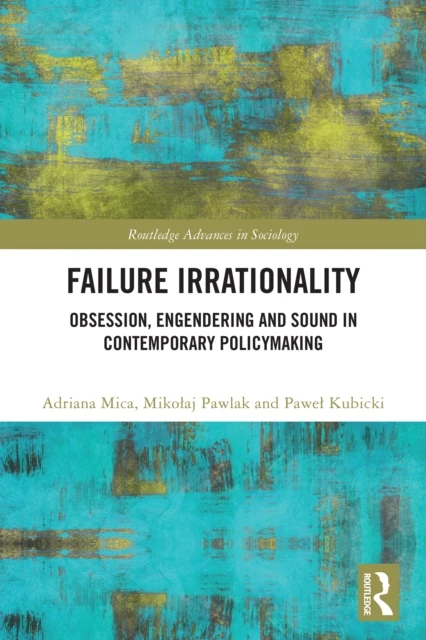
Failure Irrationality
Obsession, Engendering and Sound in Contemporary Policymaking

Introduction
This book is about irrationality and policy failures. It argues that policy failures are not rational in the sense of a policy action plan that led to an error of implementation or lack of success, followed by decision-making, coping and learning. Policy failures are rational in that they entertain an image of rationality, a mythology almost, that hides or normalises their inherent irrationality. Failure irrationality is not so much about policy failures being illogical, ad hoc or unfair; instead, it comes from the observable evolution to other forms, the autonomisation of failure. Failure is today endowed with a life of its own.
Unique Approach
This is the first book that combines failure curiosity in social sciences with literature and film that explore human absurdity, existentialism and quietism. Rendering the Irish playwright Samuel Beckett central to its analysis, it provides a comparative recent history of three public policies in Poland: migration, abortion and disability. In an age of gridlock and polarization in policy domains, this book provides a crucial disruption to the linear and policy outcome focus of traditional policymaking literature. It argues that irrationality is not a fixable institutional hazard, but rather the contemporary manifestation of a new failure ecology, acoustics and even skin.
Implications
Examining policy failure and success, this book sheds light on the social, political and emotional consequences of the process of not achieving an outcome in policymaking. It will be of interest to scholars and students of sociology, anthropology, policy studies, political science, emotion/affect studies and failure studies.