$74.99
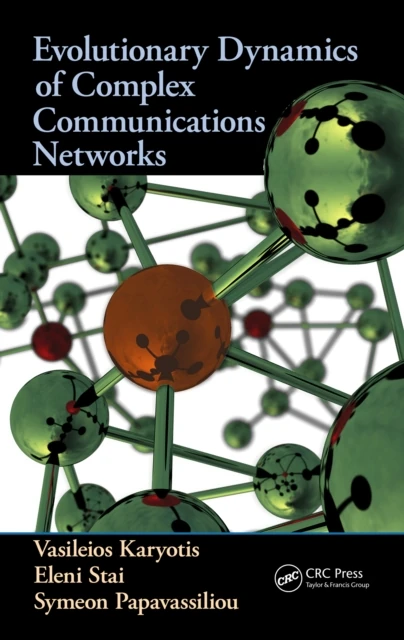
Evolutionary Dynamics of Complex Communications Networks

Introduction
Until recently, most network design techniques employed a bottom-up approach with lower protocol layer mechanisms affecting the development of higher ones. This approach, however, has not yielded fascinating results in the case of wireless distributed networks.
Top-Down Approach
Addressing the emerging aspects of modern network analysis and design, Evolutionary Dynamics of Complex Communications Networks introduces and develops a top-bottom approach where elements of the higher layer can be exploited in modifying the lowest physical topology—closing the network design loop in an evolutionary fashion similar to that observed in natural processes.
Overview of Content
This book provides a complete overview of contemporary design approaches from the viewpoint of network science and complex/social network analysis. A significant part of the text focuses on the classification and analysis of various network modification mechanisms for wireless decentralized networks that exploit social features from relevant online social networks.
Chapter Structure
Each chapter begins with learning objectives and introductory material and slowly builds to more detailed analysis and advanced concepts. Each chapter also identifies open issues, while by the end of the book, potential research directions are summarized for the more interested researcher or graduate student.
Practical Applications
The approach outlined in the book will help network designers and administrators increase the value of their infrastructure without requiring any significant additional investment. Topics covered include: basic network graph models and properties, cognitive methods and evolutionary computing, complex and social network analysis metrics and features, and analysis and development of the distinctive structure and features of complex networks.
Target Audience
Considering all aspects of modern network analysis and design, the text covers the necessary material and background to make it a suitable source of reference for graduate students, postdoctoral researchers, and scientists.