$27.99
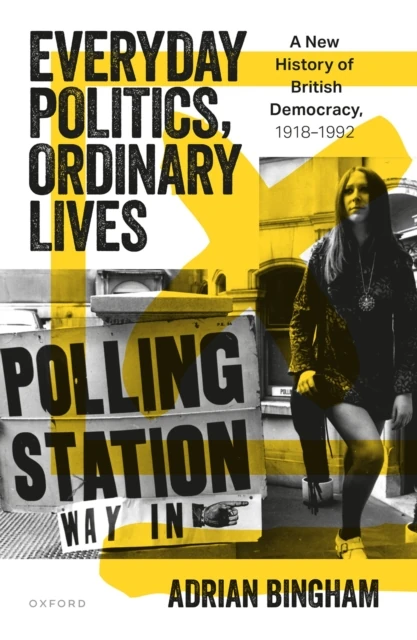
Everyday Politics, Ordinary Lives
A New History of British Democracy, 1918-1992

What did British citizens really feel about the political system, their role in it, and the people who represented them?
Everyday Politics, Ordinary Lives examines British democracy from below, investigating how electors understood politics and how they viewed its relationship to their lives, from the establishment of a near democracy with the Representation of the People Act 1918 up until the rise of the internet and 24-hour news channels in the early 1990s. It focuses on the everyday political opinions, discussions, and interactions of ordinary British voters in the period, and pays attention to the ways in which women, young people, and minoritized groups related to a political system dominated by men.
Sources and Methodology
Adrian Bingham incorporates material from a broad and diverse range of sources, from pioneering social surveys conducted after the First World War, through the mid-century qualitative research of Mass-Observation and early political scientists, up to the data-driven work of the British Election Study and modern pollsters such as Gallup and MORI. The book also draws extensively on the archives of the Conservative and Labour parties, as they sought to understand the attitudes of the voters they were trying to attract, and content from the media, memoirs, diaries, and life-writing.
Public Attitudes and Perceptions
Everyday Politics, Ordinary Lives argues that most people, across the period, felt remote from politics and sceptical of politicians. But this reflected the perception that the world of parliamentary debates and party intrigue was distant, insular, and rather impenetrable, not that people did not care about political issues or have a desire to improve their position. Britain was home to plenty of everyday political thinking and conversation, and the amount and quality of this activity tended to increase and improve over the period as people became better educated, had access to more information through the media, and the power of the democratic ideal grew in strength over the period.
Historical and Cultural Context
The author maps these changing patterns of political support to deeper social and cultural developments, and thereby produce a new and distinctive history of British democracy that challenges some of the simplistic narratives that underpin contemporary political debate.