$73.99
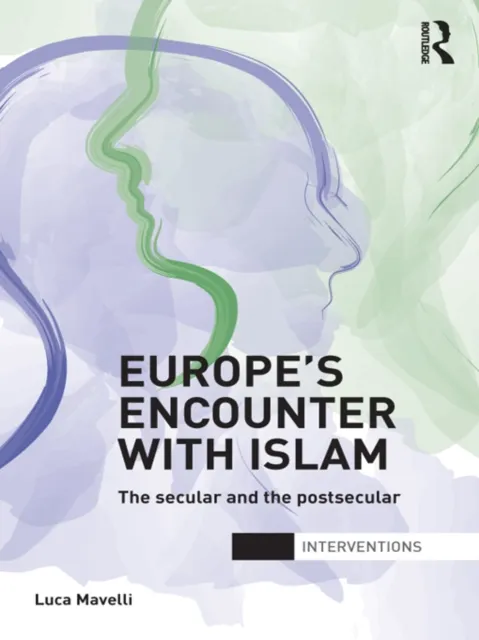
Europe's Encounter with Islam
The Secular and the Postsecular

Introduction
In the last few years, the Muslim presence in Europe has been increasingly perceived as problematic. Events such as the French ban on headscarves in public schools, the publication of the so-called Danish cartoons, and the speech of Pope Benedict XVI at the University of Regensburg have hit the front pages of newspapers the world over, and prompted a number of scholarly debates on Muslims’ capacity to comply with the seemingly neutral and pluralistic rules of European secularity.
European Secularity and Islam
Luca Mavelli argues that this perspective has prevented an in-depth reflection on the limits of Europe’s secular tradition and its role in Europe’s conflictual encounter with Islam. Through an original reading of Michel Foucault’s spiritual notion of knowledge and an engagement with key thinkers, from Thomas Aquinas to Jürgen Habermas, Mavelli articulates a contending genealogy of European secularity. While not denying the latter’s achievements in terms of pluralism and autonomy, he suggests that Europe’s secular tradition has also contributed to forms of isolation, which translate into Europe’s incapacity to perceive its encounter with Islam as an opportunity rather than a threat.
Contending Perspectives and Future Directions
Drawing on this theoretical perspective, Mavelli offers a contending account of some of the most important recent controversies surrounding Islam in Europe and investigates the postsecular as a normative model to engage with the tensions at the heart of European secularity. Finally, he advances the possibility of a Europe willing to reconsider its established secular narratives which may identify in the encounter with Islam an opportunity to flourish and cultivate its democratic qualities and postnational commitments.
Target Audience
This work will be of great interest to students and scholars of religion and international relations, social and political theory, and Islam in Europe.