$75.99
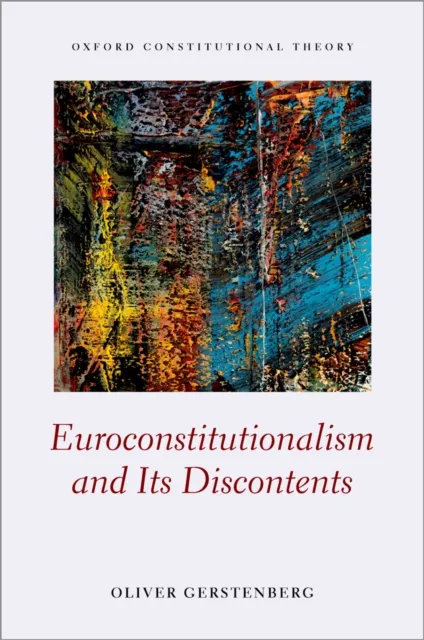
Euroconstitutionalism and its Discontents

Introduction
This book addresses the question of social constitutionalism, especially with regard to its role in the contemporary European project. For reasons of history and democracy, Europeans share a deep commitment to social constitutionalism. But in the contemporary European constitutional debate, constitutionalism and social democracy have become antagonists, with the survival of the one seeming to require sacrifice of the other.
Challenging Conventional Views
This book challenges the common view that constitutionalization means de-politicization. It argues that courts can exert a more indirect, creative, and agenda-setting role in the process of an ongoing clarification of the meaning of a right.
The Role of Courts Beyond the Nation State
The CJEU and the ECtHR - as courts beyond the nation state - are able to constructively re-open and re-politicize controversies that may appear settled at the national level in their constitutionalizing jurisprudence. And, crucially, our understanding of shared European constitutional principles is itself subject to revision and reconsideration as we accumulate experiences of dealing with diverse national contexts.
European Constitutional Principles and Democracy
By examining the jurisprudence of the CJEU and the ECtHR, the book demonstrates that in domain after domain, ranging from the protection of the vulnerable in the European social market to the guarantee of freedom of conscience, which in Europe emerged after many centuries of religious persecution, both courts can enhance and deepen democracy and thereby encourage the liberal project of constitutionalism beyond the state.
Over time, once interpretive answers have become established in practice, courts can then move towards stronger forms of judicial intervention that consolidate best practice. It is this democratic and experimental process which lies at the heart of the distinctive model of contemporary Euroconstitutionalism.