$400.99
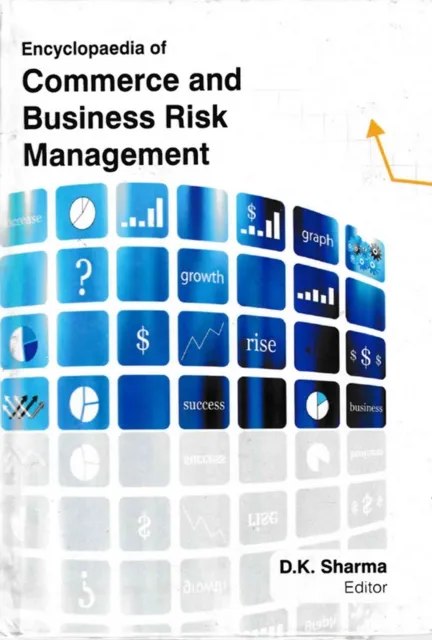
Encyclopaedia of Commerce and Business Risk Management (Financial Risk Management)

Understanding Risk in Personal and Professional Life
In our personal and professional lives we are aware of risk and we take measures to limit our exposure—home and car insurance, avoidance of hazardous situations, and contingency clauses in contracts are some examples.
Business Risk Management Goals
The goal of business risk management is to detail kinds of risks that exist in your specific business and figure out how to prevent them entirely or minimize their impact on the business as a whole.
Five-Step Approach to Risk Management
To do this, most risk managers take a five-step approach. First, identify the risks involved in all aspects of the business. Second, review the probability of the negative events occurring. Third, come up with a plan, a way to decrease the risk. Fourth, put the plan into action. Last, monitor the situation to see if the plan is effective or if it needs to be altered.
Common Perceptions and Broader Risks
When many people think of risk management, they think of events that need to be insured against, things like fires, floods, and accidents in the workplace. These kinds of events are important in business risk management, but they are not the only kinds of risks that need to be considered when managing risk.
Industry-Specific and Business-Related Risks
Risk management includes risks that are a part of the industry the business is in and the way in which it does business.
Target Audience
This encyclopaedia will be immensely useful particularly to university and college teachers, chartered accountants, and company secretaries.