$265.99
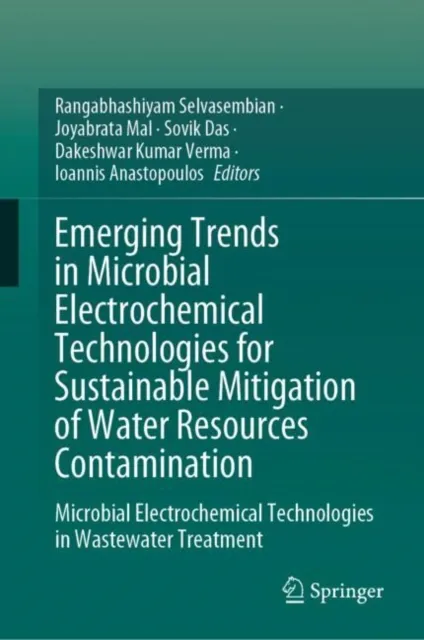
Emerging Trends in Microbial Electrochemical Technologies for Sustainable Mitigation of Water Resources Contamination
Microbial Electrochemical Technologies in Wastewater Treatment

Book Overview
The book aims to highlight the application of microbial electrochemical technologies, their fundamental to advanced, recent applications, management strategies, and relevant case studies. The book also attempts to highlight existing research and technological advancements on all facets of instruments and methods for assessing and keeping track of water contaminants. The section on current trends and advancements in this book discusses the most recent advancements in microbial electrochemical technologies and related technologies to lessen the contamination of water resources. The book goes into great detail about the fundamental aspects of water pollution, including their causes, primary sources, detection, treatment, and mitigation using microbial electrochemical technologies and management systems as well as commercialization and economics thoughts that are currently of significant importance.
Additionally, with the aid of appropriate tables and figures, all of these chapters have been arranged according to recent developments and aspects of the field. The book's goal is to give readers a fundamental understanding of how microbial electrochemical technologies work.
It is intended for a wide range of readers, including undergraduate and graduate students, researchers, academicians, environmentalists, policymakers, businesspeople, and R&D teams. We gratefully thank all of the authors. We’ll be open to recommendations for making the next book or edition better.