$65.99
Electric Arc Furnace: Methods to Decrease Energy Consumption

Introduction to Electric Arc Furnace (EAF)
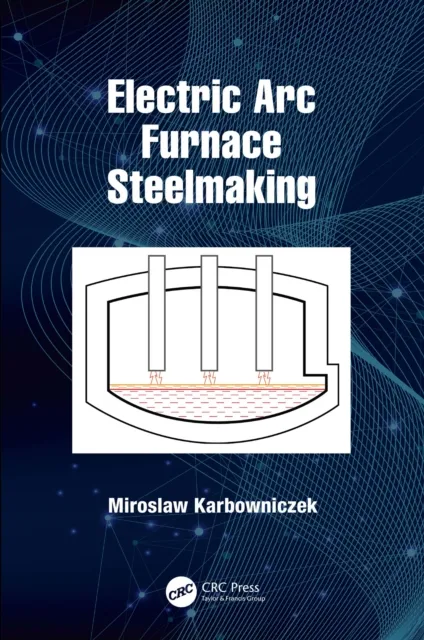
The Electric Arc Furnace (EAF) will become the largest producer of steel worldwide, replacing the conventional route through the blast furnace and BOF. In most developed countries the EAF process is already the main steelmaking reactor. This is due to many advantages, such as much lower emissions of CO₂, higher flexibility in furnace capacity and higher flexibility in the raw materials such as scrap, direct reduced iron (DRI) and pig iron. The EAF process has also experienced a larger level of automation that provides a higher productivity. However, the EAF process also has a large number of limitations in comparison with the BOF, for example; (1) use of an expensive type of energy (electric energy), (2) very poor stirring conditions which results in lower decarburization rates, (3) residual elements in steel scrap, (4) cost of scrap can be higher than iron ore, (5) dependance on DRI to produce higher quality steels, (6) higher heat losses, (7) lower metallic yield (slag leaves the furnace losing iron and heat). If the EAF process overcomes these limitations it will be able to fully overcome the BF-BOF route and become the dominant process for steelmaking in the 21st century.
Energy Reduction Methods in EAF
This book discusses in detail 15 methods to decrease energy consumption in the EAF. Decreasing energy consumption requires an integral approach which means that all methods should be fully understood and optimized.