$62.99
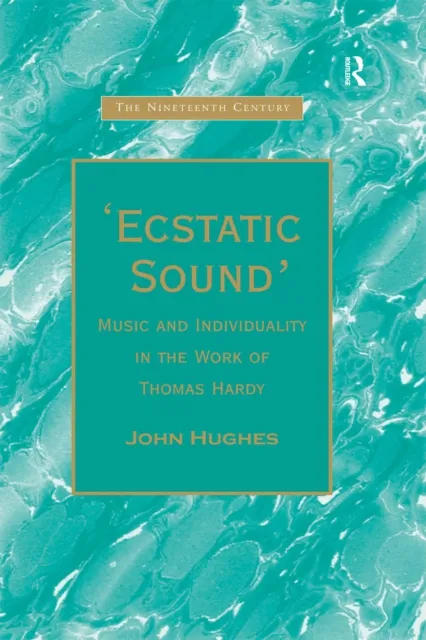
'Ecstatic Sound'
Music and Individuality in the Work of Thomas Hardy

Introduction
This book studies the ways Hardy writes about music, and argues that this focus allows for a close and varied investigation of the affective dimensions of his poetry and fiction, and his recurrent preoccupations with time, community and love. Throughout his work Hardy associates music with moments of individual expression and relatedness. For him, music provokes a response to life that is inseparable from what gives life value, as well as being incompatible with his increasingly conscious vision of personal and social limitation.
Chapters on Novels and Tales
The first two chapters trace how this ironic disjunction is evident in the novels and the tales, while exploring in detail how they represent and evoke the spiritual and emotional transports of musical experience.
Chapters on Poetry
In a corresponding way, the third and fourth chapters concentrate on how, within the poetry, music works as a vehicle of inspiration and memory, recurrently surprising the conscious self with intimations of other potentials of expression.
Philosophical and Personal Perspectives
In the fifth chapter, the focus falls on Hardy's own philosophical reading, and thus on his notebooks and letters, so as to revisit in an altered context many of the issues that have been opened up by the book's emphasis on his literary representations of musical experience—issues of individuality, of unconscious and bodily experience, of literary language.
Biographical and Theoretical Context
Finally, although the book does incorporate some biographical detail about Thomas Hardy's lifelong passion for playing and collecting music, it predominantly works through close reading, while also drawing at points on literary theoretical texts, where these offer ways of articulating the broad questions of literary convention and representation that arise.