$63.99
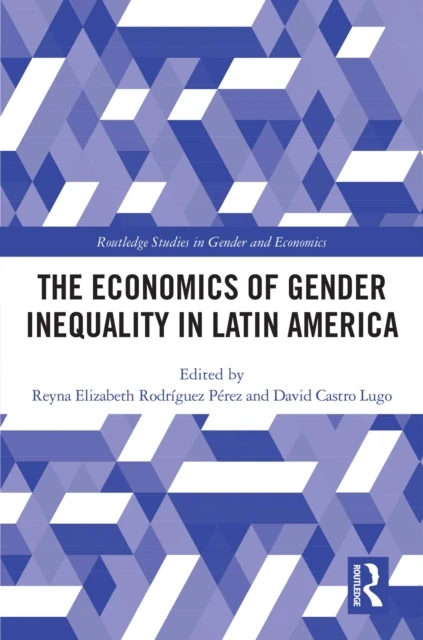
Economics of Gender Inequality in Latin America

Overview
This book provides a comprehensive examination of gender disparities through theoretical, methodological, and empirical lenses. The theoretical foundations critique neoliberal feminism, emphasizing alternative frameworks such as the Work on feminism of the 99%, which advocates redistributive justice and structural change.
Cultural Narratives and Labor Market
This book explores the impacts of cultural narratives like the superwoman ideal, revealing its role in perpetuating exploitation and gendered inequities. The labor market section analyzes persistent inequalities, such as women's economic participation and wage gaps in Argentina, Mexico, and Chile. Quantitative methods, including sequence analysis and econometric modeling, identify factors like education, motherhood, and informality as key determinants of labor outcomes. In Mexico, the digital economy has both expanded opportunities and reinforced precarious work, exacerbating wage gaps, particularly in STEM fields.
Care, Unpaid Labor, and Domestic Work
Chapters on care and unpaid labor focus on the pandemic's impact, showing that women assumed a disproportionate burden of caregiving, exacerbating pre-existing inequalities. Research on domestic and cleaning work in Argentina highlights undervaluation and systemic discrimination based on gender and class.
Gender Violence and Well-being
The intersection of gender violence and labor inequality is analyzed spatially in Mexico, revealing links between precarious work and violence. A gendered analysis of subjective well-being underscores disparities in mental health and economic satisfaction.
Policy and Practical Solutions
The final section advocates integrating a gender perspective into education and public policy, with findings from Chile and other contexts suggesting the critical role of equitable labor force participation in fostering sustainable development.
In short, this book not only enriches academic debate but also offers practical and accessible solutions for moving toward a more equitable economy.