$83.99
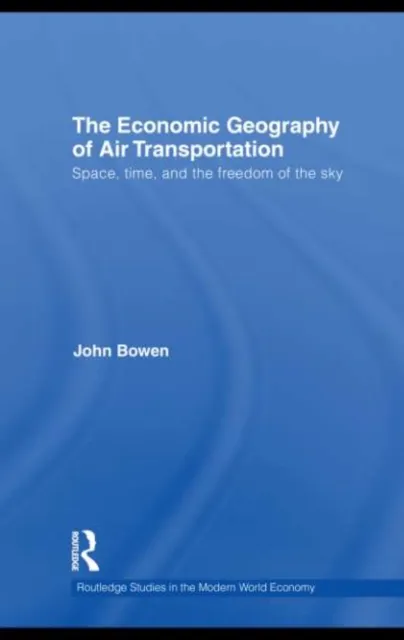
Economic Geography of Air Transportation
Space, Time, and the Freedom of the Sky

Like the railroad and the automobile, the airliner has changed the very geography of the societies it serves. Fundamentally, air transportation has helped redefine the scale of human geography by dramatically reducing the cost of distance, both in terms of time and money. The result is what the author terms the ‘airborne world’, meaning all those places dependent upon and transformed by relatively inexpensive air transportation.
The Economic Geography of Air Transportation
answers three key questions: how did air transportation develop in the century after the Wright Brothers, what does it mean to live in an airborne world, and what is the future of aviation in this century? Examples are drawn from throughout the world. In particular, ample consideration is given to the situation in developing countries, where air transportation is growing rapidly and where, to a considerable degree, the future of the airborne world will be determined.