$32.99
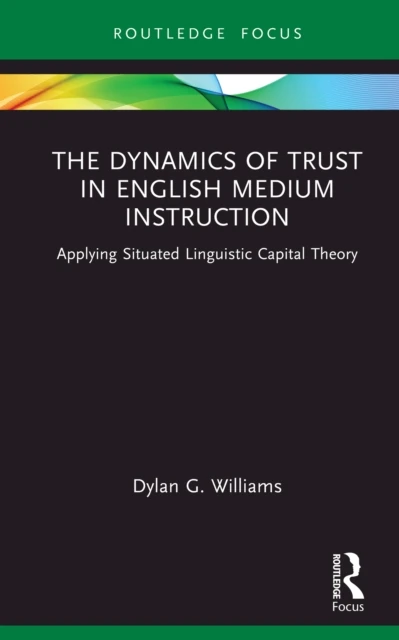
Dynamics of Trust in English Medium Instruction
Applying Situated Linguistic Capital Theory

Introduction
This book explores South Korean university students’ perceptions of the English Medium Instruction (EMI) courses they have taken. It specifically examines how the interplay of linguistic capital and trust shapes their EMI experiences.
Context and Methodology
In South Korea, the implementation of neoliberal EMI policies, driven by a top-down approach, has failed to adequately address the linguistic challenges faced by stakeholders. The setting for the book is a research-intensive university, where data were collected from ten engineering and business students through semi-structured interviews and analysed using Constructivist Grounded Theory (CGT), enabling a grounded understanding of the students’ perceptions. The areas investigated are students’ perceptions of their past experiences, of their access to subject content, and of how interactions take shape in their EMI experiences. Emerging from the analysis is a dynamic between trust and linguistic capital, which has been shaped by the past and which affects the future, leading to epistemic outcomes.
Findings and Theoretical Contributions
The results indicate that monolingually framed trust in situated-linguistic codes plays a role in the students’ EMI experiences, and from this Situated-Linguistic Capital Theory emerges. The theory indicates that monolingually framed trust reinforces binary choices, in particular EMI situations, of using either the L1 or the L2 system, which can lead to potential epistemic outcomes. The book concludes with a discussion of the factors that can determine the future success of EMI in South Korea.
Audience
This volume will be of interest to researchers and postgraduate students examining English Medium Instruction and its success in different higher education contexts.