$43.99
Discovering the Cosmos with Small Spacecraft
The American Explorer Program

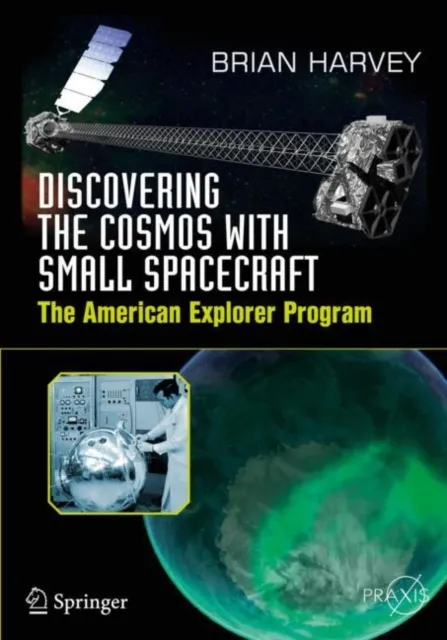
Explorer was the original American space program and Explorer 1 its first satellite, launched in 1958. Sixty years later, it is the longest continuously running space program in the world, demonstrating to the world how we can explore the cosmos with small spacecraft. Almost a hundred Explorers have already been launched.
Explorers have made some of the fundamental discoveries of the Space Age. Explorer 1 discovered Earth’s radiation belts. Later Explorers surveyed the Sun, the X-ray and ultraviolet universes, black holes, magnetars and gamma ray bursts. An Explorer found the remnant of the Big Bang. One Explorer chased and was the first to intercept a comet.
The program went through a period of few launches during the crisis of funding for space science in the 1980s. However, with the era of ‘faster, cheaper, better,’ the program was reinvented, and new exciting missions began to take shape, like Swift and the asteroid hunter WISE.
Discovering the Cosmos with Small Spacecraft gives an account of each mission and its discoveries. It breaks down the program into its main periods of activity and examines the politics and debate on the role of small spacecraft in space science. It introduces the launchers (Juno, Thor, etc.), the launch centers, the ground centers and key personalities like James Van Allen who helped develop and run the spacecraft’s exciting programs.