$162.99
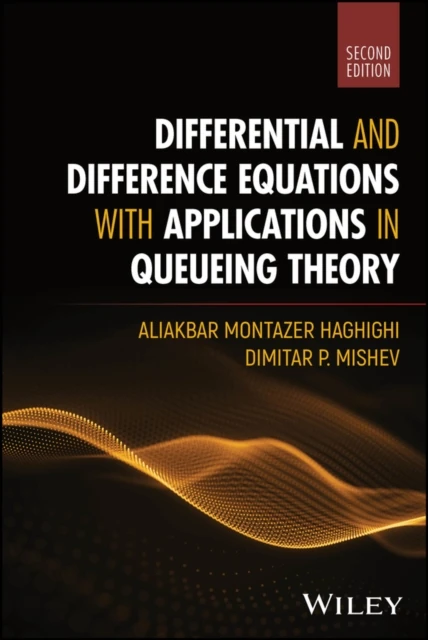
Differential and Difference Equations with Applications in Queueing Theory

Overview
A newly updated and authoritative exploration of differential and difference equations used in queueing theory. In the newly revised second edition of Differential and Difference Equations with Applications in Queueing Theory, a team of distinguished researchers delivers an up-to-date discussion of the unique connections between the methods and applications of differential equations, difference equations, and Markovian queues.
Content
The authors provide a deep exploration of first principles and a wide variety of examples in applied mathematics, engineering, and stochastic processes. This book demonstrates the wide applicability of queuing theory in fields such as telecommunications, traffic engineering, computing, and facility design.
Features
It contains brand-new information on partial differential equations as a prerequisite for solving queueing models, as well as sample MATLAB code for addressing these models.
Additional Resources
Readers will also find:
Examples and Problems
A large collection of new examples and enhanced end-of-chapter problems with included solutions.
Models
Comprehensive explorations of single-server, multiple-server, parallel, and series queue models.
Discussions
Practical discussions of splitting, delayed-service, and delayed feedback.
Theory
Enhanced treatments of concepts in queueing theory, accessible across engineering and mathematics.
Intended Audience
Perfect for junior and up undergraduate, as well as graduate students in electrical and mechanical engineering. Differential and Difference Equations with Applications in Queueing Theory will also benefit students of computer science, mathematics, and applied mathematics.