$24.99
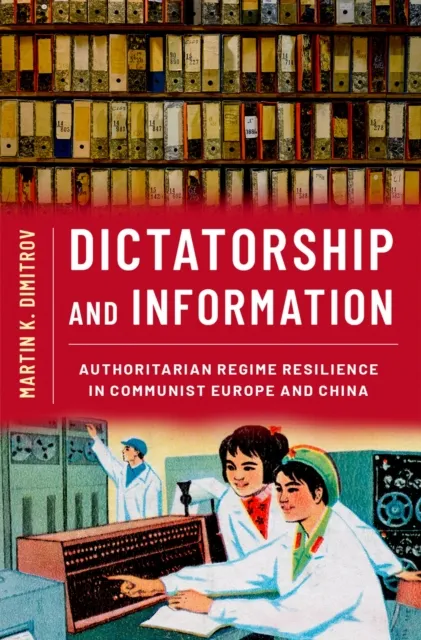
Dictatorship and Information
Authoritarian Regime Resilience in Communist Europe and China

Fear in Dictatorial Regimes
Fear pervades dictatorial regimes. Citizens fear leaders, the regime's agents fear superiors, and leaders fear the masses. The ubiquity of fear in such regimes gives rise to the "dictator's dilemma," where autocrats do not know the level of opposition they face and cannot effectively neutralize domestic threats to their rule. The dilemma has led scholars to believe that autocracies are likely to be short-lived.
Mitigating the Dictator's Dilemma
Yet, some autocracies have found ways to mitigate the dictator's dilemma. As Martin K. Dimitrov shows in Dictatorship and Information, substantial variability exists in the survival of nondemocratic regimes, with single-party polities having the longest average duration. Offering a systematic theory of the institutional solutions to the dictator's dilemma, Dimitrov argues that single-party autocracies have fostered channels that allow for the confidential vertical transmission of information, while also solving the problems associated with distorted information.
Focus on Communist Regimes
To explain how this all works, Dimitrov focuses on communist regimes, which have the longest average lifespan among single-party autocracies and have developed the most sophisticated information-gathering institutions. Communist regimes face a variety of threats, but the main one is the masses. Dimitrov therefore examines the origins, evolution, and internal logic of the information-collection ecosystem established by communist states to monitor popular dissent.
Research and Findings
Drawing from a rich base of evidence across multiple communist regimes and nearly 100 interviews, Dimitrov reshapes our understanding of how autocrats learn--or fail to learn--about the societies they rule, and how they maintain--or lose--power.