$56.99
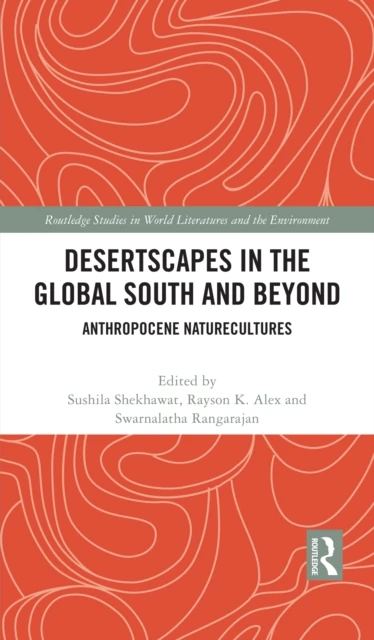
Desertscapes in the Global South and Beyond
Anthropocene Naturecultures

Introduction
Embracing a rich diversity of voices, this volume seeks to explore the different facets of Anthropocene naturecultures in the desert biomes of the Global South and beyond.
Essays and Themes
Essays in this collection will articulate issues of desertification, indigeneity and re-inhabitation in narratives that thread together Tibet, China, Australia, India, South Mexico, South Africa and Brazil in all their richness and complexity.
Re-imaging the desert figure's rich biodiversity, this book presents new ways to envision the human relationships to natural ecology and mindful accountability, tracing complex narrative connections and challenging hegemonic norms of its role in the co-construction of identity, affect, and gender.
Essays also aim to engage in an intertextual conversation with colonial genres that influence the popular conception of these spaces, moving beyond the usual tropes to forge a topographically informed desert identity and posit a 'natureculture' ecosystem based on the interpenetration of landscape, culture, and history.
Environmental and Social Issues
This volume includes literary exploration of environmental injustices, analyzing motifs of deforestation, land degradation, falling crop production, toxic man-made chemicals, and extractivist practices linked to various social and economic stressors and gradients in economic and political power.
Contribution and Significance
This diverse volume will provide a significant contribution to desert humanities from the Global South, responding to the pressing problems of the Anthropocene and employing place-based ecocritical frameworks that help us imagine a sustainable way of life.