$47.99
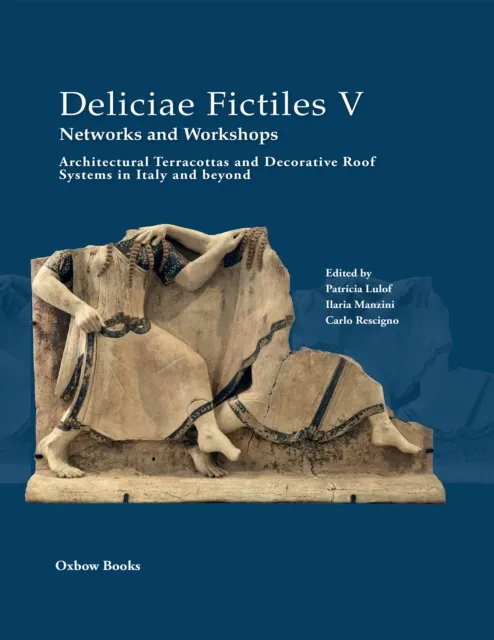
Deliciae Fictiles V. Networks and Workshops
Architectural Terracottas and Decorative Roof Systems in Italy and Beyond

Temples in Ancient Italy
Temples are the most prestigious buildings in the urban landscape of ancient Italy, emerging within a network of centres of the then-known Mediterranean world. Notwithstanding the fragmentary condition of the buildings’ remains, these monuments – and especially their richly decorated roofs – are crucial sources of information on the constitution of political, social and craft identities, acting as agents in displaying the meaning of images.
Scope and Focus of the Volume
The subject of this volume is thematic and includes material from the Eastern Mediterranean (including Greece and Turkey). Contributors discuss the network between patron elites and specialized craft communities that were responsible for the sophisticated terracotta decoration of temples in Italy between 600 and 100 BC, focusing on the mobility of craft people and craft traditions and techniques, asking how images, iconographies, practices and materials can be used to explain the organization of ancient production, distribution and consumption. Special attention has been given to relations with the Eastern Mediterranean (Greece and Anatolia).
Research Significance
Investigating craft communities, workshop organizations and networks has never been thoroughly undertaken for this period and region, nor for this exceptionally rich category of materials, or for the craftspeople producing the architectural terracottas. Papers in this volume aim to improve our understanding of roof production and construction in this period, to reveal relationships between main production centres, and to study the possible influences of immigrant craftspeople.