$215.99
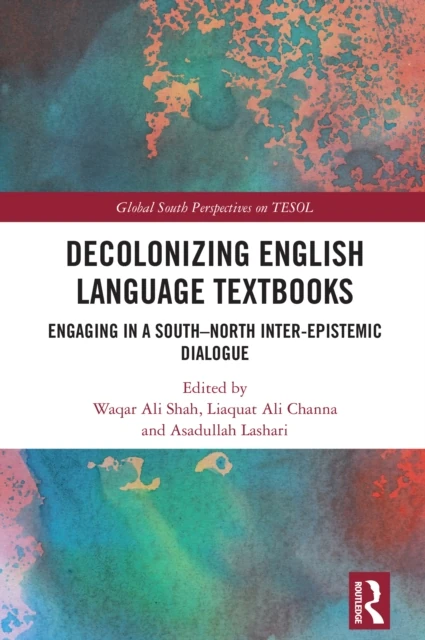
Decolonizing English Language Textbooks
Engaging in a South-North Inter-epistemic Dialogue

Introduction
Bringing together diverse perspectives from authors situated in both the Global South and the Global North, this ground-breaking volume takes a critical, decolonial, and global southern approach to exploring colonial epistemologies and pedagogies surrounding textbook discourses and research.
Methodology and Approach
Using a South-North inter-epistemic dialogue, the book challenges conventional notions of undertaking research that includes local ways of knowing and Indigenous knowledge. By doing so, the book disrupts colonial ideologies, values, and culture, and instead suggests local Indigenous frameworks and methodologies for textbook research and epistemology.
Contributors and Methodologies
Contributors engage with various methodologies, such as ethnography, action research, textbook analysis, duo-ethnographies, and interview-based studies informed by various theoretical perspectives, including translanguaging, postmethod condition, critical visual literacy, gender decoloniality, critical discourse studies, multi-modality, raciolinguistics, decolonial awakening, Afro-centric epistemologies, decolonial interculturality, and pedagogy of becoming.
Discourse and Perspectives
The chapters also uncover how teacher educators, researchers, and textbook writers view, engage, and negotiate with these discourses. With chapters originating from across the globe (such as Nigeria, Algeria, Pakistan, Indonesia, Colombia, Brazil, Denmark, Chile, Bangladesh, Morocco, and Greece), the book demonstrates rich geographical and epistemological diversity.
Implications and Audience
Ultimately providing a wealth of insights for researchers working on decolonization in TESOL/ELT in general and on ELT textbooks and pedagogy in particular, this book will be of use to scholars, researchers, and postgraduate students in the field of curriculum studies and teachers working in the field of language education.