$48.99
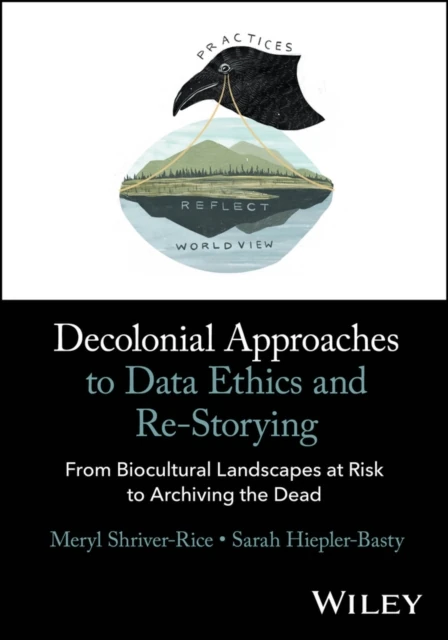
Decolonial Approaches to Data Ethics and Re-Storying
From Biocultural Landscapes at Risk to Archiving the Dead

Decolonial Approaches to Data Ethics and Re-Storying: From Biocultural Landscapes at Risk to Archiving the Dead
This interdisciplinary book navigates applying decolonial theories to practices across disciplines. Decolonial work requires remaining deferent to communities and collaborators while also leveraging resources to support their priorities. It provides a roadmap tracing the ways in which digital technologies, global biodiversity, cultural heritage, and decolonial futures are deeply interconnected.
In conversation with Indigenous, Black, Latinx, Asian, and Nordic postcolonial and decolonial studies, this handbook surveys decolonial approaches to digital and academic practices. The authors argue that digital spaces and media can act as spaces of decolonial intervention within community-based work, historical re-telling, biocultural research projects, educational and historical archives, and museum display.
Data comes in many forms, often reflecting the values of those who collected it, through how and why it was collected, what information was included or omitted. Taking a decolonial stance to data involves accepting multiple truths and expanding beyond Western notions of sterile objectivity to respect different ways of knowing.
Digital spaces and platforms are often overlooked as simple information display mechanisms. However, digital technologies are not neutral; they embed implicit meanings through their structure, social, and cultural use. Decolonial approaches are necessary to organize and present data in ways that avoid colonial values and tell stories of epistemic resistance, resurgence, and survivance.
Developing new decolonial digital content or databases for climate storytelling, updating colonial histories, environmental conservation, or museum displays requires accountability to postcolonial and decolonial scholars and advocates.
Practical Focus Areas
Relational work with communities, ethics of social science methods, re-storying colonial narratives through media at heritage sites, issues within environmental conservation, cultural items and ancestors' entanglement with landscapes, epistemic justice in data categorization, archiving, and mapping.
Designed for undergraduate, master's, and interdisciplinary PhD students in fields such as digital conservation, ethnobiology, museum studies, decolonial studies, Native and Indigenous studies, STS, ecology, environmental communication, archival studies, environmental media, environmental justice, digital futures, human ecology, archaeology, anthropology, public history, community-based research, social science ethics, environmental conservation, and critical technology studies.
Key Questions and Endorsements
What role do digital technologies have in decolonial practice, institutional change, and reparative justice?
Meryl Shriver-Rice and Sarah Hiepler-Basty's book offers cross-disciplinary insights, from universities to museums and heritage sites, on these urgent questions. It challenges whose stories are told, by whom, and on what terms.
Professor Dan Hicks emphasizes the importance of centering Indigenous knowledge systems and community-centered approaches for ethical research and interpretation.
Wunneanatsu Lamb-Cason highlights the need for media classrooms to apply decolonial theory, urging a rethinking of colonial approaches.
Phillip Mendenhall stresses the importance of understanding decolonial strategies for students before engaging in fieldwork and analysis.
Faith Decontie encourages reflection on decolonial practices to unsettle colonial systems and procedures.
Andrew Frank notes the book's practical guidance for addressing scholarly barriers in Indigenous studies.
Uzi Baram underscores the significance of digital technologies in maintaining an inclusive and just historical record in an increasingly virtual era.