$81.99
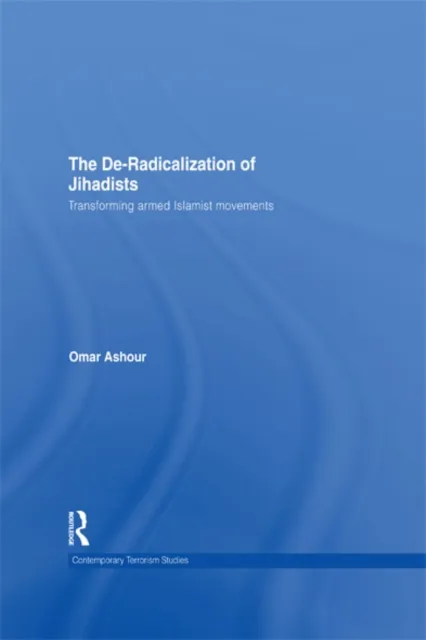
De-Radicalization of Jihadists
Transforming Armed Islamist Movements

Introduction
This book is the first detailed study of the causes of de-radicalization in armed Islamist movements. It is based on frontline research that includes interviews with Jihadist leaders, mid-ranking commanders, and young sympathizers, as well as former security and intelligence officers and state officials.
Scope and Analysis
Additionally, it is also the first book to analyze the particular conditions under which successful de-radicalization can take place. The current literature on Islamist movements attempts to explain two principal issues: their support of violence (radicalization) and their changing attitudes towards democracy and democratization (moderation). However, the reasons behind renouncing (behavioural de-radicalization) and de-legitimizing (ideological de-radicalization) violence have not been evaluated to date. The author provides an in-depth analysis of the de-radicalization processes of the Egyptian Muslim Brothers (1951-73), former allies of al-Qa''ida, such as al-Gama''a al-Islammiyya (Islamic Group of Egypt, 1997-2002) and al-Jihad Organization (2007- present), as well as of Algerian Islamist groups (1997-2000). The book also analyzes cases of de-radicalization failure.
Key Questions and Findings
The two questions that the book highlights and attempts to answer are Why? and How? For example, why do radical Islamist militants revise their ideologies, strategies and objectives and initiate a de-radicalization process; and what are the necessary conditions behind successful de-radicalization? De-radicalization of Jihadists shows how a combination of charismatic leadership, state repression, social interactions and selective inducements can ultimately lead jihadists to abandon ''jihad'' and de-legitimize violence.
Target Audience
This book will be of great interest to students of radical Islamist movements and Islamic Studies, terrorism and political violence, security studies, and Middle Eastern politics.
Author
Omar Ashour is a Lecturer in Politics in the Institute of Arab and Islamic Studies, University of Exeter. He has a PhD in International Relations from McGill University in Canada.