$69.99
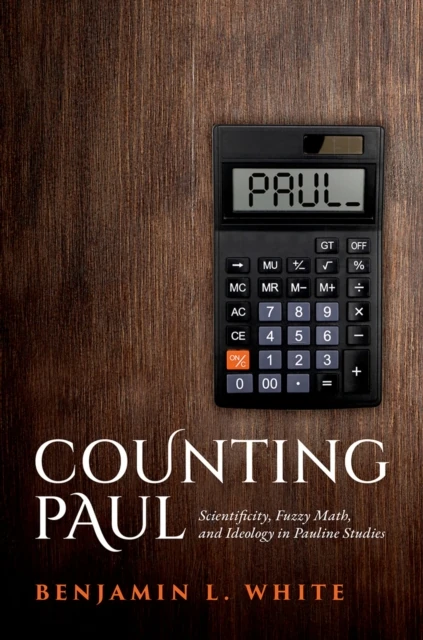
Counting Paul
Scientificity, Fuzzy Math, and Ideology in Pauline Studies

Who wrote the Pauline Epistles?
For nearly 1,700 years the answer seemed fairly straightforward. The New Testament canon set the boundary at thirteen (or fourteen, including Hebrews) Pauline Epistles, alongside an uncontroversial biographical framework within which to imagine them in Acts. In the early nineteenth century the identification of the historical Paul with the canonical Paul was severed when theologian Ferdinand Christian Baur of the University of Tübingen laid the groundwork for the fundamental historiographical moves that still orient Pauline Studies as a critical discipline by both delimiting the number of authentic Pauline Epistles and highlighting the tendentious character of Acts'' portrayal of Paul.
Analysis of the authenticity of Pauline Epistles
Given the highly uncertain and subjective nature of so much of the argumentation over the authenticity of the Pauline Epistles as it developed in the nineteenth century, the analysis of authorial style took on increasing weight as a way out of so many special decisions. The linguistic features of texts were counted, averaged, and compared. In measuring one text against another, the Pauline stylome emerged as the incontrovertible standard for uncovering canonical forgeries in the Apostle''s name.
Computational approach to Pauline authorship
Tracing the long history of the computational approach to the Pauline authorship problem, Counting Paul exposes the ideological foundations and questionable science of much of the work and argues that Pauline biography ought not be written from fewer sources than what the New Testament has given us, but rather more. It advocates for a more expansive vision of what might count as Pauline by reorienting our focus away from internal criteria, like appeals to style, and toward external criteria, like the reception of Paul in the generations after his death.