$52.99
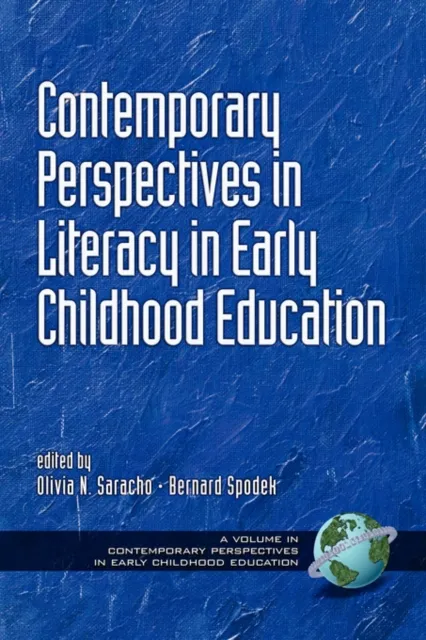
Contemporary Perspectives in Literacy in Early Childhood Education

Introduction
This volume identifies and critically analyzes research studies related to the critical skills, environments, and adult interactions that contribute to young children's literacy development. The volume reminisces on the reformation that has emerged in the language and literacy education of young children.
Historical Context
Prior to the 1960's, few studies were available on pre-first-grade literacy. Then studies began to emerge in the 1960's focusing on the reading readiness paradigm and on the conventional assumption that literacy development was only introduced when children experienced formal reading instruction in school (Sulzby & Teale, 1986). Fortunately, Durkin (1966) found that there were children reading before first grade and determined that the reading readiness paradigm was theoretically and pragmatically incongruous. Others followed Durkin's footsteps.
Key Concepts about Literacy Acquisition
Sulzby and Teale (1986) identify the following concepts about young children's acquisition of literacy learning:
- Literacy development originates well before children are introduced to formal instruction.
- The notion that reading precedes writing or that writing precedes reading is a fallacy.
- Literacy blooms in "real-life" settings and by performing real-life activities that are used to "get things done."
- The purposes of literacy for young children are as important in learning about writing and reading as are the dimensions of literacy.
- Children's cognitive development is important to their acquisition of literacy during the years from birth to six.
- Children learn written language when they actively engage in their world.
Role of Teachers and Early Experiences
Competent teachers throughout the United States suggest that prior to attending school, children have acquired a distinctive culture, collection of experiences, and group of abilities (Vacca & Vacca, 2000). Many prekindergarten children have been in a group setting for three and four years such as a child care setting where teachers and caregivers teach them reading and writing.