$69.99
$111.99
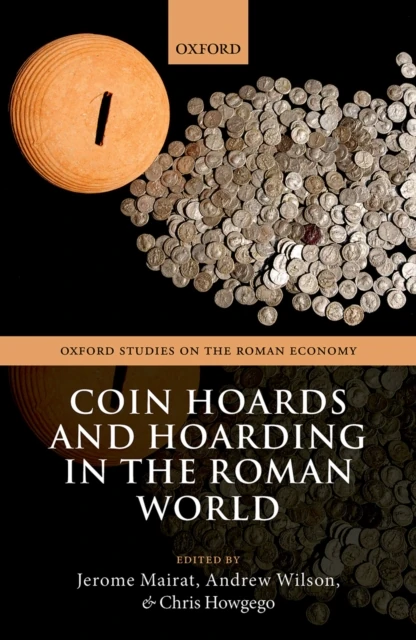
Coin Hoards and Hoarding in the Roman World

Coin Hoards and Hoarding in the Roman World
presents fourteen chapters from an interdisciplinary group of Roman numismatists, historians, and archaeologists, discussing coin hoarding in the Roman Empire from c. 30 BC to AD 400. The book illustrates the range of research themes being addressed by those connected with the Coin Hoards of the Roman Empire Project, which is creating a database of all known Roman coin hoards from Augustus to AD 400. The volume also reflects the range of the Project's collaborations, with chapters on the use of hoard data to address methodological considerations or monetary history, and coverage of hoards from the west, centre, and east of the Roman Empire, essential to assess methodological issues and interpretations in as broad a context as possible.
Chapters on methodology and metrology introduce statistical tools for analysing patterns of hoarding, explore the relationships between monetary reforms and hoarding practices, and address the question of value, emphasizing the need to consider the whole range of precious metal artefacts hoarded. Several chapters present regional studies, from Britain to Egypt, conveying the diversity of hoarding practices across the Empire, the differing methodological challenges they face, and the variety of topics they illuminate. The final group of chapters examines the evidence of hoarding for how long coins stayed in circulation, illustrating the importance of hoard evidence as a control on the interpretation of single coin finds, the continued circulation of Republican coins under the Empire, and the end of the small change economy in Northern Gaul.