$263.99
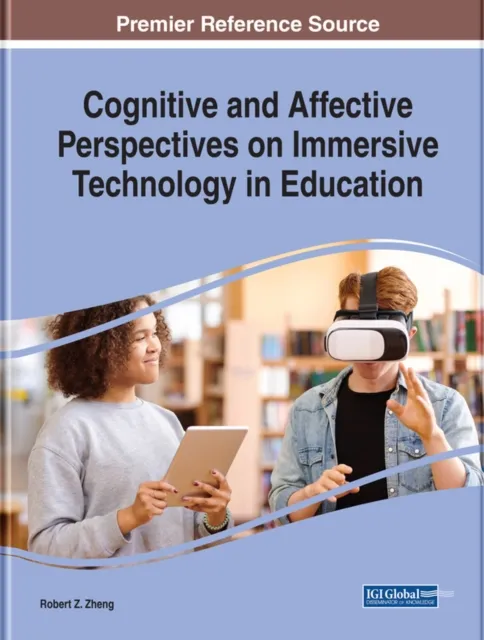
Cognitive and Affective Perspectives on Immersive Technology in Education

Immersive Technology Overview
Immersive technology as an umbrella concept consists of multiple emerging technologies including augmented reality (AR), virtual reality (VR), gaming, simulation, and 3D printing. Research has shown immersive technology provides unique learning opportunities for experiential learning, multiple perspectives, and knowledge transfer. Due to its role in influencing learners' cognitive and affective processes, it is shown to have great potential in changing the educational landscape in the decades to come.
Challenges in Immersive Technology Research
However, there is a lack of general cognitive and affective theoretical framework to guide the diverse aspects of immersive technology research. In fact, lacking the cognitive and affective theoretical framework has begun to hamper the design and application of immersive technology in schools and related professional training.
About the Book
Cognitive and Affective Perspectives on Immersive Technology in Education is an essential research book that explores methods and implications for the design and implementation of upcoming immersive technologies in pedagogical and professional development settings. The book includes case studies that highlight the cognitive and affective processes in immersive technology as well as the successful applications of immersive technology in education.
Topics and Audience
Featuring a wide range of topics such as curriculum design, K-12 education, and mobile learning, this book is ideal for academicians, educators, policymakers, curriculum developers, instructional designers, administrators, researchers, and students.