$51.99
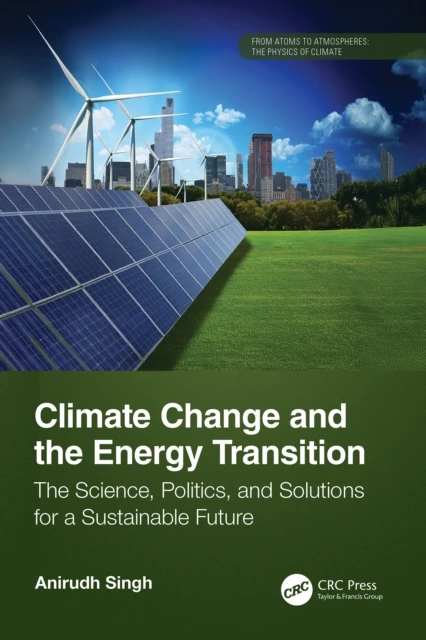
Climate Change and the Energy Transition
The Science, Politics, and Solutions for a Sustainable Future

Introduction
The climate crisis is on the brink of its threshold of no return, and there is great urgency for finding a viable solution to this existential threat. But many have still not woken up to the seriousness of the situation. This book attempts to remove some of the key knowledge barriers and proposes a radically new strategy to treat the crisis.
Learning Journey
The book takes the reader on a learning journey through the cause of global warming, the impacts of climate change, and the science behind changes in the Earth's climate system. A detailed introduction to how the Earth's climate system is monitored by NASA, the European Space Agency (ESA) and the US National Oceanic and Atmospheric Administration (NOAA) using projects such as the Clouds and the Earth's Radiant Energy System (CERES) project follows, and how the Intergovernmental Panel on Climate Change (IPCC) teams together with climate modelling centres to predict future climate change using climate models is explained.
Historical Context and International Efforts
The reader is treated with a history lesson on the UN Framework Convention on Climate Change (UNFCCC) and its Conference of the Parties (COPs) as well as the Paris Agreement, the latter of which signals the beginning of an organised effort to tackle the climate issue.
Energy Transition and Climate Status
The role of renewable energy in the energy transition is elaborated. Attention next dwells on the state of the global climate near 1.5(deg)C.
Proposed Solutions
The final chapter proposes a new climate action framework and action strategy, dubbed the rationalised net-zero strategy, that employs an innovative process to include external influences on climate action into a new unified strategy.
Intended Audience and Key Features
The book is primarily intended for climate policymakers, NGOs, climate action practitioners and advocates, as well as academics, government and private sector decision-makers and the climate-conscious public at large.
Key Features: Written in plain English. A comprehensive, coherent and timely treatment of the climate crisis, from the science background to the policies, and the required energy transition and strategies needed to implement them. Provides a contiguous historical record of the progress of climate action from the Paris Agreement to the present.