$114.99
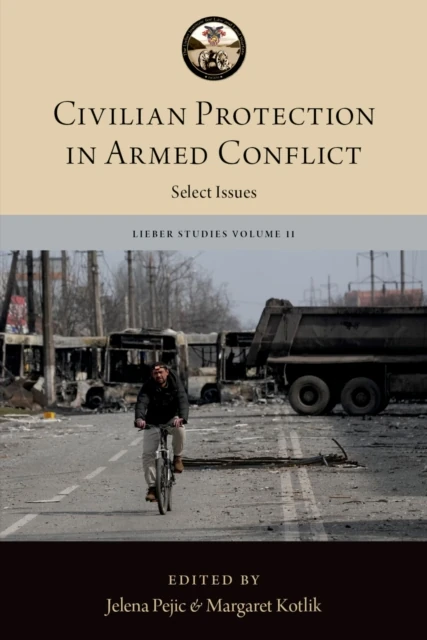
Civilian Protection in Armed Conflict
Select Issues

Protecting civilians who have fallen into enemy hands or are just about to come under the adversary's control is a constant challenge in the application of international humanitarian law (IHL) and the law of armed conflict (LOAC).
Despite many decades of scholarship, military operational practice, and advocacy, certain legal questions remain unresolved, while others have been insufficiently examined or are newly emerging due to technological, societal, and cultural developments.
Civilian Protection in Armed Conflict
explores a range of longstanding, current, and new legal and practical issues in the interpretation and application of IHL/LOAC related to civilian protection.
The subjects selected are based on the experiences or observations of repeated dilemmas about the extent of legal protections owed and actually extended to civilians in military operations.
These include the protection of unprivileged belligerents and civilians in the invasion phase of international armed conflict, the law underlying civilian screening operations, and the challenges of setting up humanitarian corridors.
Responding to recent armed conflicts including in Ukraine, Gaza, and Sudan, renewed attention is also paid to the rules governing deportation and forced conscription, and to the evolving area of civilian data protection and extraterritorial data migration.
Developing interfaces between IHL/LOAC and other legal regimes, including environmental concerns, gender considerations, emerging technologies, and forensic science considerations are likewise explored.
In all cases, accountability for non-respect of IHL/LOAC remains a fundamental legal obligation.