$52.99
China's One Belt One Road Initiative

Background of OBOR
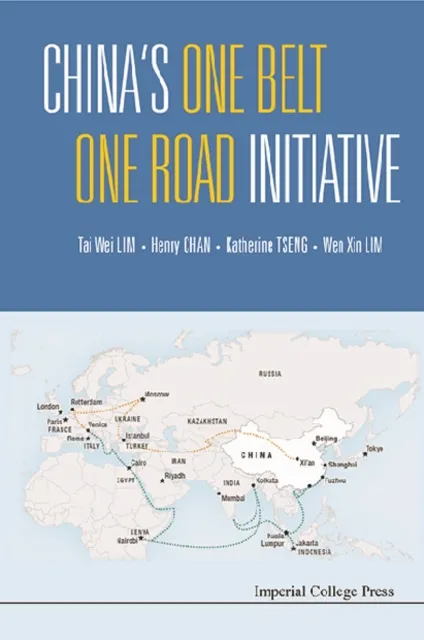
Chinese President Xi Jinping launched the Silk Road Economic Belt component of the One Belt One Road (OBOR) initiative at Kazakhstan in 2013. OBOR is a development strategy and framework that focuses on connectivity and cooperation among countries primarily in Eurasia. It consists of two main components, the land-based Silk Road Economic Belt (SREB) and ocean-going Maritime Silk Road (MSR).
Purpose of the Book
This book studies the equilibrium or balance between overland and maritime trade routes of OBOR. It has two major sections.
Interpretive Section
The interpretive section examines contemporary media narratives related to the OBOR initiative and how contemporary commentators appropriate narratives about historical events related to the maritime Silk Road to interpret current policy agendas and legitimize diplomatic or economic exchanges.
Institutional Studies
In terms of institutional studies, the chapters related to Asian Infrastructure Investment Bank (AIIB) will look at the issues facing the Bank in its quest to form a new world platform for multilateral development financing.
Empirical Case Study
The other section, the empirical case study of the publication, highlights the fact that Euro-China High Speed Rail (HSR) and Central Asia-China HSR are not viable at the moment as passenger volume is not sufficient to justify the HSR line. This section examines the overland route of the OBOR and looks at recent Chinese HSR history and conventional sub-high speed rail technology development, and identifies technical & economic criteria determining the appropriate technology for a certain line.
The chapter in this section will use the developed criteria to analyze the various rail linkage projects currently under study in the OBOR framework, highlight the economic, bureaucratic and geo-political challenges that these projects likely face, and lay down conditions that will determine the outcome of these projects.