$210.99
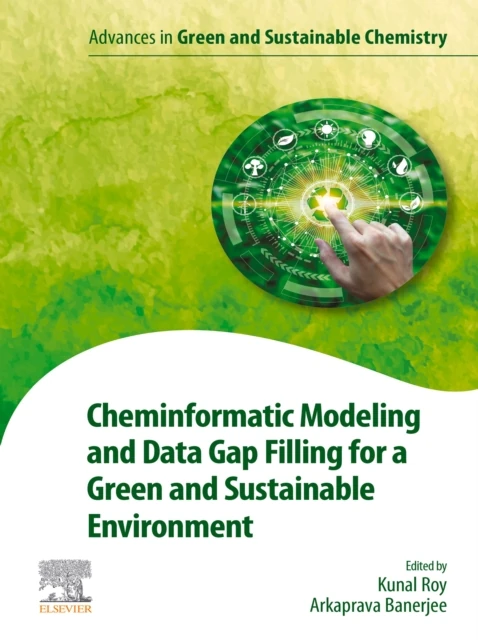
Cheminformatic Modeling and Data Gap Filling for a Green and Sustainable Environment

Cheminformatic Modelling and Data Gap Filling for a Green and Sustainable Environment
covers the theory and practices of chemical informatics, focusing on modeling various properties and endpoints related to chemicals for improved chemical management and the design of safer chemicals to promote environmental sustainability.
Across four sections, the book outlines modeling techniques such as quantitative structure-property relationship (QSPR), read-across, and machine learning for modeling environmental endpoints of chemicals. OECD guidelines are discussed and considered for model development and validation, documentation using the QSAR modeling reporting format (QMRF), and regulatory requirements for result presentation.
The book offers full datasets, algorithm information, and real-world case studies for all models, along with worked examples. It will serve as an essential resource for chemists and environmental scientists working in green and sustainable chemistry, but will be a great resource for students and academics at graduate level and above studying cheminformatics. This book will also be of interest to researchers developing new and sustainable chemicals and for decision-makers looking to make industrial processes more sustainable.
Key Features
Presents multiple algorithms for QSPR models and machine learning methods for modeling environmental endpoints
Discusses crucial emerging topics in sustainable chemistry, such as mixture property modeling, microplastic toxicity modeling, and natural language models for toxicity and ecotoxicity prediction
Provides a comprehensive framework for modeling physicochemical properties, environmental thresholds, and acute and chronic toxicity endpoints
Includes more than 20 real-world case studies, featuring datasets for environmental endpoints, with examples of model development and methodology