$101.99
Charlemagne and Rome
Alcuin and the Epitaph of Pope Hadrian I

Charlemagne and Rome
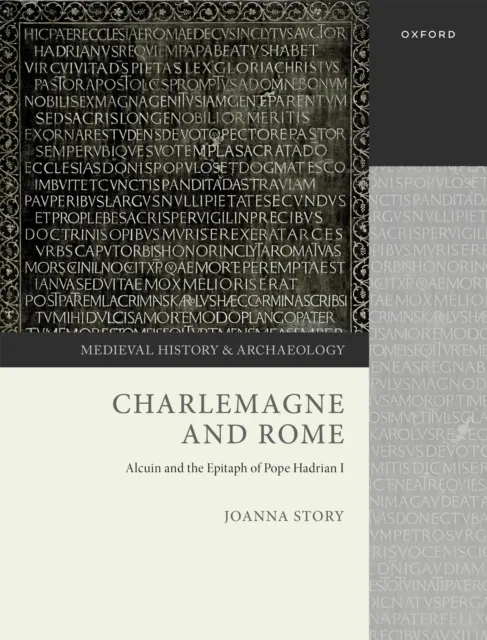
It is a wide-ranging exploration of cultural politics in the age of Charlemagne. It focuses on a remarkable inscription commemorating Pope Hadrian I who died in Rome at Christmas 795. Commissioned by Charlemagne, composed by Alcuin of York, and cut from black stone quarried close to the king's new capital at Aachen in the heart of the Frankish kingdom, it was carried to Rome and set over the tomb of the pope in the south transept of St Peter's basilica not long before Charlemagne's imperial coronation in the basilica on Christmas Day 800. A masterpiece of Carolingian art, Hadrian's epitaph was also a manifesto of empire demanding perpetual commemoration for the king amid St Peter's cult. In script, stone, and verse, it proclaimed Frankish mastery of the art and power of the written word, and claimed the cultural inheritance of imperial and papal Rome, recast for a contemporary, early medieval audience. Pope Hadrian's epitaph was treasured through time and was one of only a few decorative objects translated from the late antique basilica of St Peter's into the new structure, the construction of which dominated and defined the early modern Renaissance. Understood then as precious evidence of the antiquity of imperial affection for the papacy, Charlemagne's epitaph for Pope Hadrian I was preserved as the old basilica was destroyed and carefully redisplayed in the portico of the new church, where it can be seen today. Using a very wide range of sources and methods, from art history, epigraphy, palaeography, geology, archaeology, and architectural history, as well as close reading of contemporary texts in prose and verse, this book presents a detailed ''object biography'', contextualising Hadrian's epitaph in its historical and physical setting at St Peter's over eight hundred years, from its creation in the late eighth century during the Carolingian Renaissance through to the early modern Renaissance of Bramante, Michelangelo, and Maderno.