$46.99
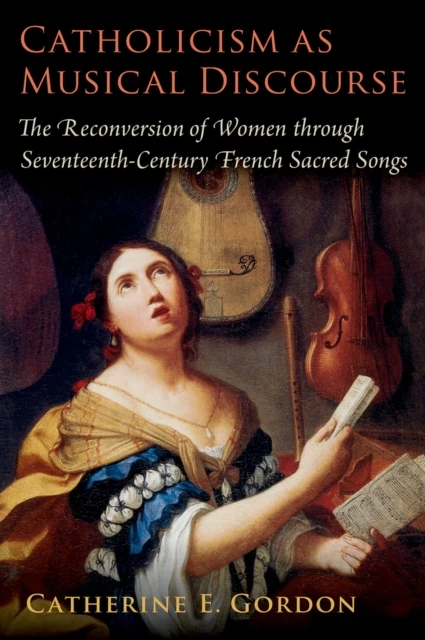
Catholicism as Musical Discourse
The Reconversion of Women through Seventeenth-Century French Sacred Songs

Catholicism as Musical Discourse
reveals the important role that French-language sacred songs, written primarily for women, played in the evolution of the Catholic Reform over the long seventeenth century.
Thought to be one of the best ways to facilitate a deeper spiritual experience and alter behavior, sacred songs became a part of the Catholic Church's effort to mediate and shape the role of women in French society.
Whether contrafacta of secular songs or newly composed texts and music, sacred songs (cantiques, airs spirituel, or airs de devotion) were non-liturgical and written primarily by clergymen.
The songs gave voice to various, even contradictory, interpretations of Catholicism.
Some texts were educational, some expressed a female religiosity focusing on love for Jesus and God, and some communicated Jansenist notions regarding sin and penitence.
The intended public--women--determined the repertory's discursive properties: the messages communicated, language used, prescribed function(s), and musical features.
Through an analysis of the musical repertory over time, Catholicism as Musical Discourse demonstrates how transformations within the church were linked to religious, political, and social and cultural trends, including the wars of religion, the fight against libertinism, Louis XIV's relationship with the church, the need to convert lay women to a life of piety, the condemnation of mysticism, the rise and fall of Jansenism, the need for female educational institutions, and an increasing public interest in connecting religious devotion with pleasurable entertainments.
Although the songs' styles and lyrics changed over time, the power of music as one of the most important discursive modes of communication during the Catholic Reform remained the same.