$77.99
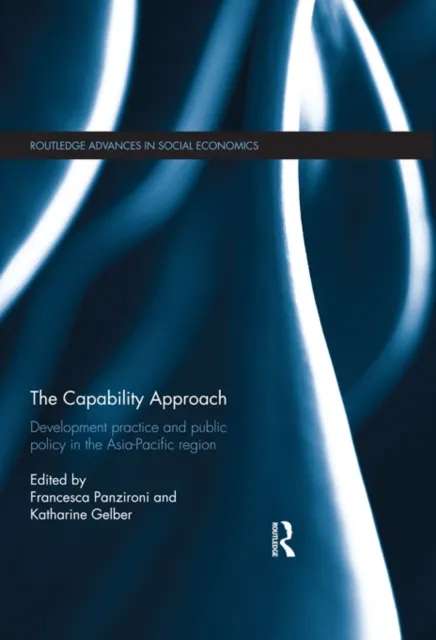
Capability Approach
Development Practice and Public Policy in the Asia-Pacific Region

Capability in Practice in the Asia-Pacific Region
This book provides a unique laboratory of capabilities in practice in the Asia-Pacific region. It explores the application of the capability approach in development practice and public policy from a multidisciplinary perspective by bringing together scholars and practitioners from a wide range of disciplinary backgrounds, including development studies, health policy, political science, political theory, political economy, architecture, indigenous studies, urban planning and communication technologies.
Theoretical Framework and Empirical Applications
The first part of the book provides a foundational theoretical framework to introduce the empirical applications of the capability theory in different areas of development practice and public policy in the Asia-Pacific region. This part discusses thorny issues in capability theory and raises the potential for capability theory to lead to new ways of thinking about old problems.
Application to Marginalisation and Public Policy
The second part discusses the application of the capability approach to intransigent problems of marginalisation and the articulation of public policy in New Zealand and Australia. In particular, this part focuses on the potential implications that a capability-based approach can have on the well-being of indigenous peoples in both countries, as well as children, older renters, and urban dwellers in Australia.
Application in Developing Countries
The third part elucidates how capability theory is being applied by researchers in the Asia-Pacific region to local issues in developing countries such as Samoa, Vanuatu, Papua New Guinea and Sri Lanka. In doing so, it provides original content to the world market in capability theory by focussing on this often-neglected area of scholarship.
Overall Significance
As a whole, this volume offers a unique and innovative scrutiny of a multifaceted capability-based analysis of development practice and public policy. The scope and breadth of this volume advance the application of the capability approach and offer an indispensable resource to scholars, researchers, policy makers and policy practitioners interested in the theoretical insights and practical implications of the capability approach.