$84.99
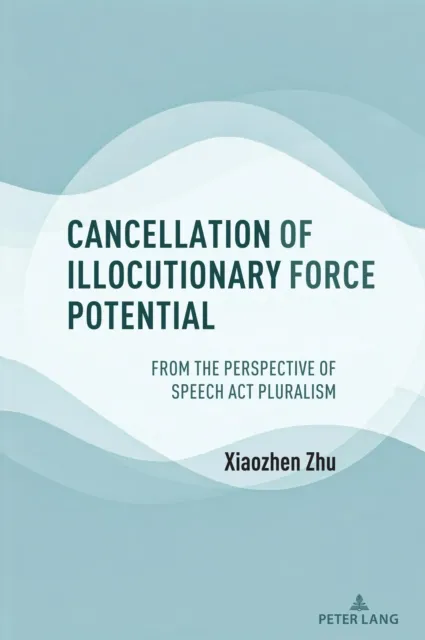
Cancellation of Illocutionary Force Potential
From the Perspective of Speech Act Pluralism

Introduction
This book investigates the general cancellability of illocutionary force potential through a systematic exploration conducted along three main lines. Firstly, it addresses significant divergences in previous literature on meaning cancellation to uncover their fundamental causes and reconcile differing viewpoints. Secondly, it establishes a comprehensive taxonomy of illocutionary force potential based on a thorough review of previous classifications and an understanding of the characteristic features of illocutionary force. Thirdly, it examines the variation in the degree of cancellability among illocutionary forces of varying strengths and their implications for real-life communication.
Senses of Cancellation
The study distinguishes between two senses of illocutionary force potential cancellation: failure to actualize an illocutionary force and cancellation of an actualized illocutionary force through explicit or contextual means. It emphasizes the need for analyses of cancellability across three dimensions: literalness, speaker’s intention, and addressees’ intention, among other potential factors. Two depictions of cancellability are delineated: a static depiction based on classic Gricean criteria for consistent judgments and a dynamic depiction based on revised criteria that consider contextual use.
Conclusion
Ultimately, this study aims to advance research on the nature of illocutionary force and deepen understanding of meaning cancellation, contributing to the broader discourse on ordinary language meaning in diverse communication contexts.