$172.99
Brief Guide to Optical Spectroscopy of Trivalent Rare Earth Ions in Glasses

Introduction
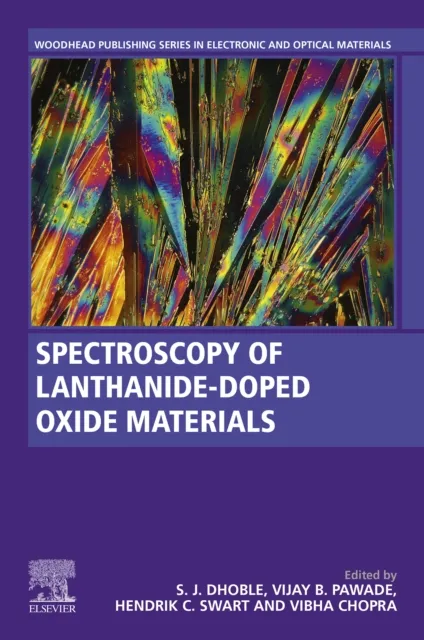
This book provides a concise and accessible guide to the spectroscopic measurement and analysis of trivalent rare-earth ions in glasses. As the demand for faster telecommunications, more efficient lasers, and smarter optical sensors accelerates, rare-earth-doped glasses have become a cornerstone of modern photonics and emerging quantum technologies. Fully harnessing their potential, however, requires a deep understanding of their spectroscopic behavior. Spectroscopy of rare-earth doped glasses is a vital resource for researchers, engineers, and advanced students moving from material fabrication to functional device design.
Characterization Techniques
This book offers a rigorous and practical journey through the essential characterization techniques that reveal the inner workings of these versatile materials.
Foundational Principles
Inside, readers will find detailed coverage of foundational principles such as absorption and luminescence spectra and decay lifetimes, which are used to probe the energy-level structure and dynamics of rare-earth ions.
Advanced Techniques
Advanced characterization techniques are also presented, including leveraging Judd–Ofelt theory to predict radiative properties, applying the Z-scan method for nonlinear-optical analysis, and utilizing emission-intensity ratios for precision optical thermometry.
Data Analysis
Practical data analysis is highlighted as well, moving beyond theory with step-by-step methodologies for interpreting spectroscopic results: calculating emission cross-sections, modeling energy transfer, and performing colorimetric analysis.
Applications
Cutting-edge applications demonstrate how characterization outcomes directly inform the design and optimization of photonic integrated circuits, optical amplifiers, laser systems, and nanophotonic devices.
Conclusion
By seamlessly integrating theory, experiment, and data processing, this book equips readers not only to collect data but to derive meaningful, actionable conclusions. It is an indispensable guide for anyone committed to advancing optical materials research and shaping the next generation of quantum photonic technologies.