$88.99
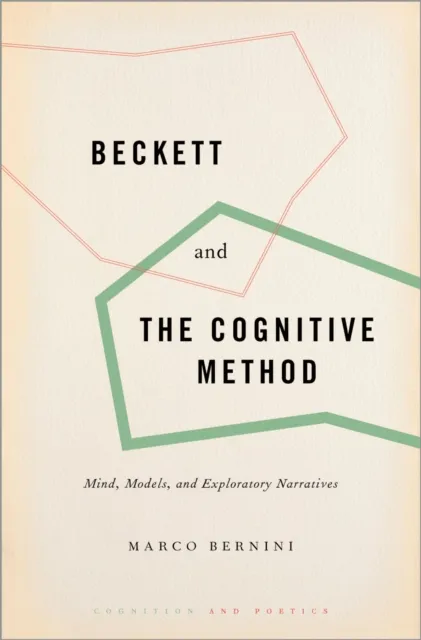
Beckett and the Cognitive Method
Mind, Models, and Exploratory Narratives

Does literature merely represent cognitive processes, or can it enhance, parallel, or reassess the scientific study of the mind?
Beckett and the Cognitive Method argues that Samuel Beckett's narrative work, rather than just expressing or rendering mental states, inaugurates an exploratory use of narrative as an introspective modeling technology. Through a detailed analysis of Beckett's entire corpus and published volumes of letters, this book argues that Beckett pioneered a new method of writing to construct (in a mode analogous to scientific inquiry) models for the exploration of core laws, processes, and dynamics in the human mind.
Marco Bernini integrates frameworks from contemporary narrative theory, cognitive sciences, phenomenology, and philosophy of mind to make a case for Beckett's modeling practice. Bernini demonstrates how this modeling applies to a vast array of processes including the (narrative) illusion of a sense of self, the dialogic interaction with memories and felt presences, the synesthetic nature of inner experience and mental imagery, the role of moods and emotions as cognitive drives, and the emergent quality of consciousness.
Beckett and the Cognitive Method also reflects on how Beckett's fictional cognitive models are transformed into reading, auditory, or spectatorial experiences generating through narrative devices insights on what the sciences can only discursively report. As such, Bernini argues that literature should be considered a proper exploration of the mind, with its own tools and models for cognitive inquiry.