Currently not available in the United States
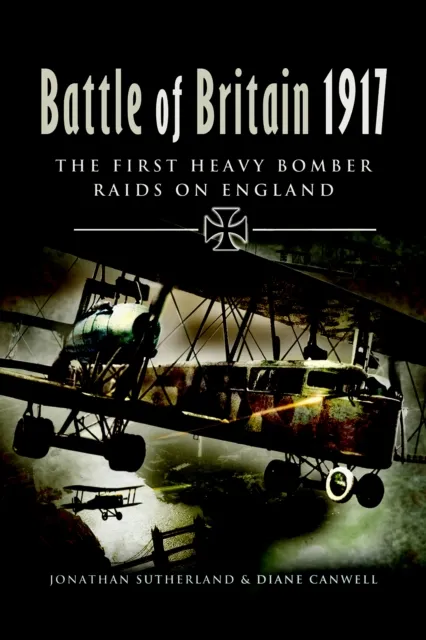
Battle of Britain 1917
The First Heavy Bomber Raids on England

In the autumn of 1916 the Germans began to equip with the Gotha twin-engine bomber.
The Gothas were designed to carry out attacks across the channel against Britain. A group of four squadrons was established in Belgium, and they carried out their first bombing raid towards the end of May 1917. This 22 aircraft sortie, against the town of Folkestone, caused 95 deaths. In mid June a force of 18 Gothas attacked London in broad daylight. Over 90 British fighters met them, but not one Gotha was brought down. This bombing raid caused 162 deaths.
The Zeppelin-Staaken Riesenflugzeug or "Giant" bomber
It had a range of about 800km (500 miles). The Gotha/Giant night raids continued throughout 1917, almost unscathed until December when the British began to have success in intercepting the Gothas at night. Anti-aircraft fire was also becoming more effective and the increased use of barrage balloons affected the bombers. By the end of the war a 50-mile long line of barrage balloons surrounded London.
The Giants' campaign against London
On 16 February, during a four aircraft raid, a Giant dropped a 1,000 kg (2,200 lb) bomb—the largest used by anyone in the war—and blew up a wing of the Chelsea hospital.