$63.99
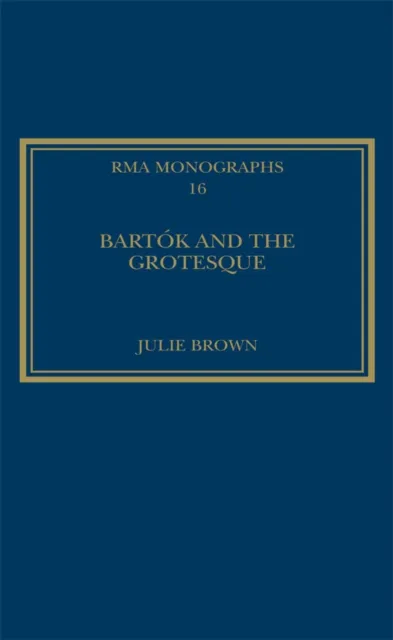
Bartok and the Grotesque
Studies in Modernity, the Body and Contradiction in Music
The Grotesque in Art
The grotesque is one of art's most puzzling figures - transgressive, comprising an unresolveable hybrid, generally focussing on the human body, full of hyperbole, and ultimately semantically deeply puzzling.
In Bluebeard's Castle (1911), The Wooden Prince (1916/17), The Miraculous Mandarin (1919/24, rev. 1931) and Cantata Profana (1930), Bart engaged scenarios featuring either overtly grotesque bodies or closely related transformations and violations of the body.
In a number of instrumental works he also overtly engaged grotesque satirical strategies, sometimes - as in Two Portraits: "Ideal" and "Grotesque" - indicating this in the title.
Julie Brown's Perspective
In this book, Julie Brown argues that Bart's concerns with stylistic hybridity (high-low, East-West, tonal-atonal-modal), the body, and the grotesque are interconnected.
While Bart developed each interest in highly individual ways, and did so separately to a considerable extent, the three concerns remained conceptually interlinked. All three were thoroughly implicated in cultural constructions of the Modern during the period in which Bart was composing.