$39.99
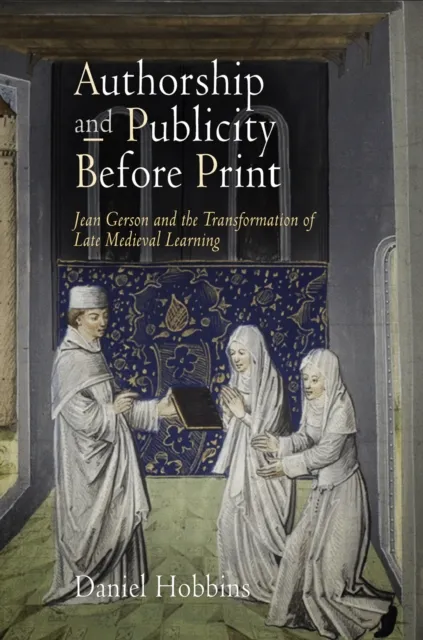
Authorship and Publicity Before Print
Jean Gerson and the Transformation of Late Medieval Learning

Jean Gerson and the Cultural Shifts of the Fourteenth and Fifteenth Centuries
Widely recognized by contemporaries as the most powerful theologian of his generation, Jean Gerson (1363-1429) dominated the stage of western Europe during a time of plague, fratricidal war, and religious schism. Yet modern scholarship has struggled to define Gerson's place in history, even as it searches for a compelling narrative to tell the story of his era.
Daniel Hobbins argues for a new understanding of Gerson as a man of letters actively managing the publication of his works in a period of rapid expansion in written culture. More broadly, Hobbins casts Gerson as a mirror of the complex cultural and intellectual shifts of the fourteenth and fifteenth centuries. In contrast to earlier theologians, Gerson took a more humanist approach to reading and to authorship. He distributed his works, both Latin and French, to a more diverse medieval public. And he succeeded in reaching a truly international audience of readers within his lifetime. Through such efforts, Gerson effectively embodies the aspirations of a generation of writers and intellectuals. Removed from the narrow confines of late scholastic theology and placed into a broad interdisciplinary context, his writings open a window onto the fascinating landscape of fifteenth-century Europe.
The Cultural Landscape of Late Medieval Europe
The picture of late medieval culture that emerges from this study offers neither a specter of decaying scholasticism nor a triumphalist narrative of budding humanism and reform. Instead, Hobbins describes a period of creative and dynamic growth, when new attitudes toward writing and debate demanded and eventually produced new technologies of the written word.