$58.99
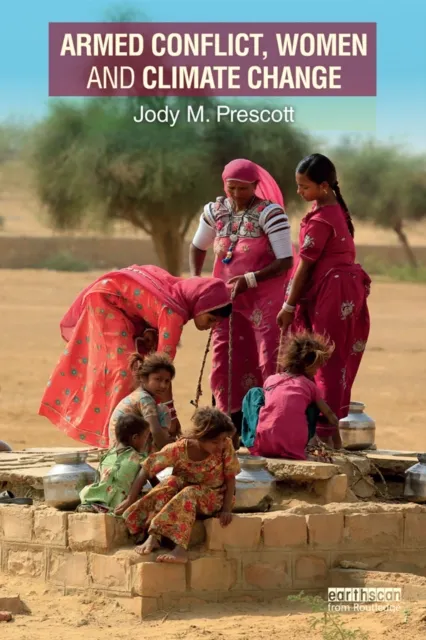
Armed Conflict, Women and Climate Change

Introduction
The gender-differentiated and more severe impacts of armed conflict upon women and girls are well recognised by the international community, as demonstrated by UN Security Council Resolution (UNSCR) 1325 on Women, Peace and Security and subsequent resolutions. Similarly, the development community has identified gender-differentiated impacts upon women and girls as a result of the effects of climate change. Current research and analysis has reached no consensus as to any causal relationship between climate change and armed conflict, but certain studies suggest an indirect linkage between climate change effects such as food insecurity and armed conflict.
Research Gaps and Focus
Little research has been conducted on the possible compounding effects that armed conflict and climate change might have on at-risk population groups such as women and girls. Armed Conflict, Women and Climate Change explores the intersection of these three areas and allows the reader to better understand how military organisations across the world need to be sensitive to these relationships to be most effective in civilian-centric operations in situations of humanitarian relief, peacekeeping and even armed conflict. This book examines strategy and military doctrine from NATO, the UK, US and Australia, and explores key issues such as displacement, food and energy insecurity, and male out-migration as well as current efforts to incorporate gender considerations in military activities and operations.
Target Audience
This innovative book will be of great interest to students and scholars of international relations, international development, international security, sustainability, gender studies and law.