$41.99
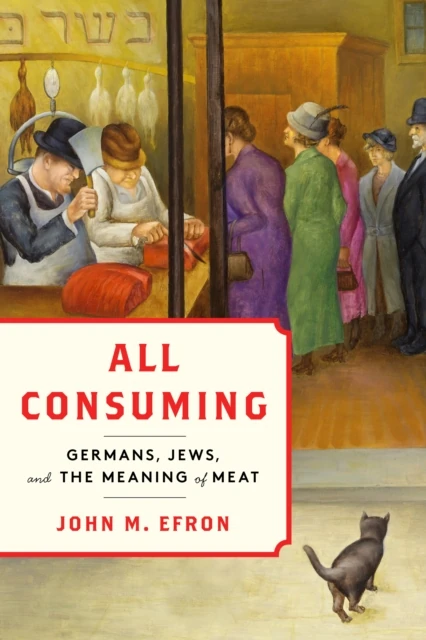
All Consuming
Germans, Jews, and the Meaning of Meat

Overview
An engaging 700-year history of meat at the intersection of German and Jewish culture, uniquely illuminating the rich, fraught, and tragic history of German Jewry.
The Significance of Meat in Judaism
In Judaism, meat is of paramount importance as it constitutes the very focal point of the dietary laws. With an intricate set of codified regulations concerning forbidden and permissible meats, highly prescribed methods of killing, and elaborate rules governing consumption, meat is one of the most visible, and gustatory, markers of Jewish distinctness and social separation. It is an object of tangible, touchable, and tastable difference like no other.
About All Consuming
In All Consuming, historian John M. Efron focuses on the contested culture of meat and its role in the formation of ethnic identities in Germany. To an extent not seen elsewhere in Europe, Germans have identified, thought about, studied, decried, and gladly eaten meat understood to be "Jewish." Expressions of this engagement are found across the cultural landscape—in literature, sculpture, and visual arts—and evident in legal codes and commercial enterprises. Likewise, Jews in Germany have vigorously defended their meats and the culture and rituals surrounding them by educating Germans and Jews alike about their meaning and relevance.
Historical Perspective
Exploring a cultural history that extends some seven hundred years, from the Middle Ages to today, Efron goes beyond a discussion of dietary laws and ritual slaughter to take a broad view of what meat can tell us about German-Jewish identity and culinary culture, Jewish and Christian religious sensibilities, and religious freedom for minorities in Germany. In so doing, he provides a singular window into the rich, fraught, and ultimately tragic history of German Jewry.