$92.99
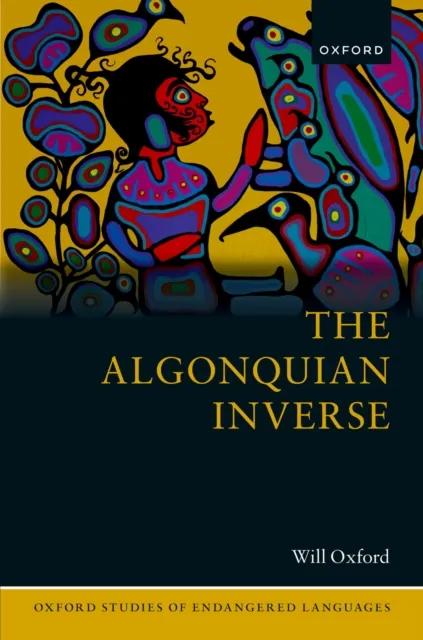
Algonquian Inverse

Introduction
This book serves as a definitive reference for the inverse morphology of the Algonquian languages, which has attracted much attention in typological and theoretical linguistics.
Patterning and Framework
Will Oxford describes the patterning of inverse morphology across the Algonquian family and presents a framework for understanding the structure and function of the Algonquian inverse that is empirically driven and typologically grounded.
Data and Perspectives
He presents data from all documented Algonquian languages and considers not only the morphology of the inverse construction but also its syntax and pragmatics, giving equal weight to diachronic, typological, functional, and formal perspectives.
Understanding the Inverse
From the integration of these perspectives, a simple and coherent understanding of the nature of the inverse emerges. The key proposal is that the inverse is "deep" in some contexts and "shallow" in others.
Interactions and Constructions
In interactions between two third persons, the inverse is a "deep" patient voice construction that inverts the canonical morphology, syntax, and pragmatics of a transitive clause. In interactions between a third person and a first or second person, the inverse is a "shallow" hierarchical agreement pattern implemented through a spurious use of patient voice morphology, inverting the canonical morphology of a transitive clause but having no effect on syntax or pragmatics.
Split Analysis and Benefits
This split analysis, which reflects the likely diachronic development of the Algonquian inverse, is argued to have various benefits, including the resolution of a longstanding controversy over the syntactic status of the inverse.