$214.99
AI-Driven Nanotechnology in Precision Medicine and Healthcare

Introduction
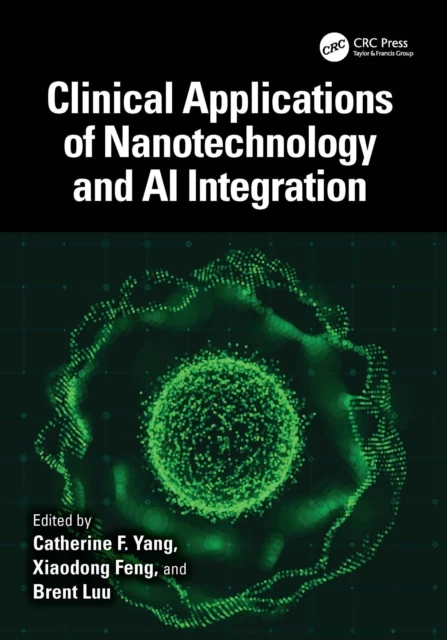
This book offers emerging knowledge of the current integration and coordination of two mainstream technologies, i.e., artificial intelligence (AI) and nanotechnology, for medical applications toward precision medicine and personalized healthcare.
Topics Covered
It covers burning subtopics highlighting nanomedicines, nanorobotics, nanocarriers, nanosensors, and nanomotors, in their advanced versions powered by AI models, which drive the design and engineering of smart nanomaterials.
Applications of Smart Nanomaterials
These smart nanomaterials can be applied as parts of "AI-enabled nanotechnology" to organize next-generation healthcare systems for advancing global public health.
Medical Fields and Disease Management
AI-enabled nanotechnology is highly expected to be applied in medical fields involving combat to various diseases, such as cancers, infectious diseases, inflammatory diseases, and autoimmune disorders, and was comprehensively discussed in this book for the emerging AI-assisted approaches of disease prediction, medical diagnostics, tissue engineering, cell therapy, gene therapy, and vaccine development.
Safety and Environmental Risks
This book shares opinions on safety and environmental risks in medical applications of nanotechnology and the integration of AI technology.
Intended Audience
The readers include students, teachers, professors, researchers, experts, in the medical field and materials science, and those who are interested or learning ways to develop precision medicine and next-generation healthcare.