$145.99
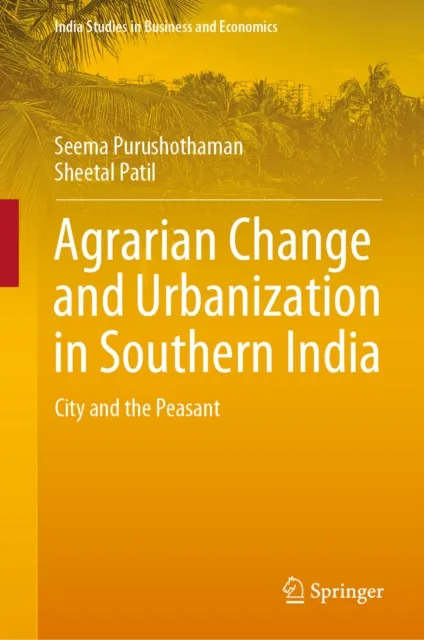
Agrarian Change and Urbanization in Southern India
City and the Peasant

Introduction
This book takes readers on a journey through the evolution of agricultural communities in southern India, from their historical roots to the recent global neo-liberal era. It offers insights into a unique combination of themes, with a particular focus on agrarian change and urbanisation, specifically in the state of Karnataka where both aspects are significant and co-exist.
Case Studies and Framework
Based on case studies from Karnataka in South India, the book presents a regional yet integrated multi-disciplinary framework for analysing the persistence, resilience and future of small farmer units. In doing so, it charts possible futures for small farm holdings and identifies means of integrating their progress and sustainability alongside that of the rest of the economy. Further, it provides arguments for the relevance of small holdings in connection with sustainable livelihoods and welfare at the grass roots, while also catering to the welfare needs of society at the macro level.
Contribution and Audience
The book makes a valuable contribution to the scholarship of agrarian as well as peri-urban transdisciplinary literature. For agrarian academics, students and the teaching community, the book’s broad and topical coverage make it a valuable resource. For development practitioners and for those working on issues related to urbanisation, urban peripheries and the rural–urban interface, this book offers a new perspective that considers the primary sector on par with the secondary and tertiary. It also offers an insightful guide for policymakers and non-government organisations working in this area.